
个人简介(About Me)
西北师范大学心理学院博士研究生(2024级在读)。以第一作者身份在 Child Development、Schizophrenia Bulletin、BMC Medicine、Translational Psychiatry、International Journal of Clinical and Health Psychology、Schizophrenia Research 等国际期刊发表学术论文,并主持省级高校研究生”创新之星”科研项目一项。研究方向聚焦于人类高级认知的计算机制、发展规律与精神病理损伤,综合运用认知行为实验、功能磁共振成像(fMRI)等认知神经科学方法与计算建模、机器学习及大语言模型等计算技术,致力于阐明执行功能等高级认知过程的计算神经机制,并探索精神分裂症、抑郁症等精神障碍认知损伤的计算标记与干预靶点。
研究方向:
- 执行功能的计算神经机制
- 基于大语言模型的类脑认知智能研究
- 精神分裂症与抑郁症的认知计算机制
Email: tyzhang9804@gmail.com
科研论文(Research Publications)
2026年
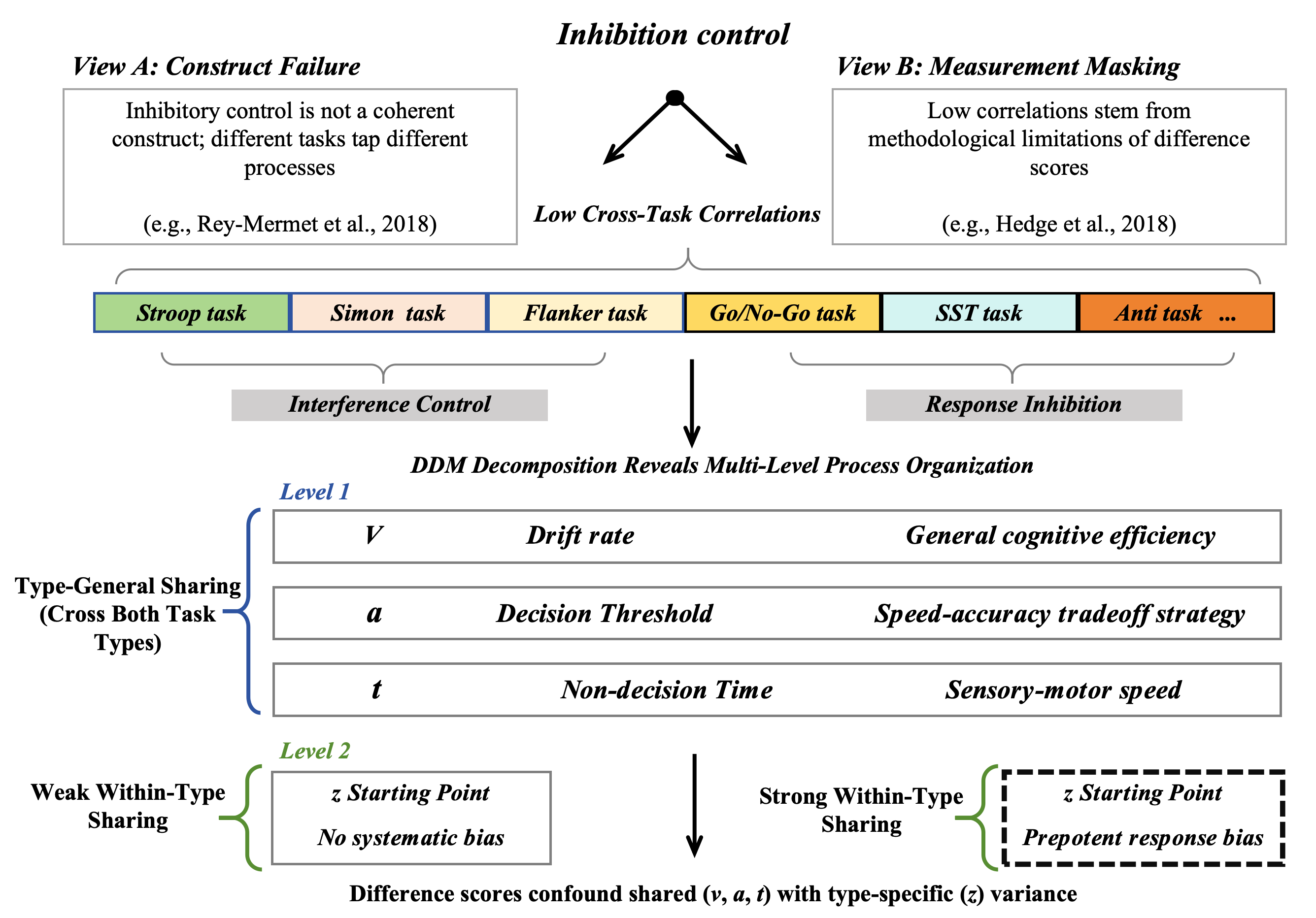
Major RevisionHierarchical organization of cognitive processes underlies low cross-task correlations in inhibitory control: Evidence from drift diffusion modeling
Submitted to Journal of Experimental Psychology: General
Figure 1
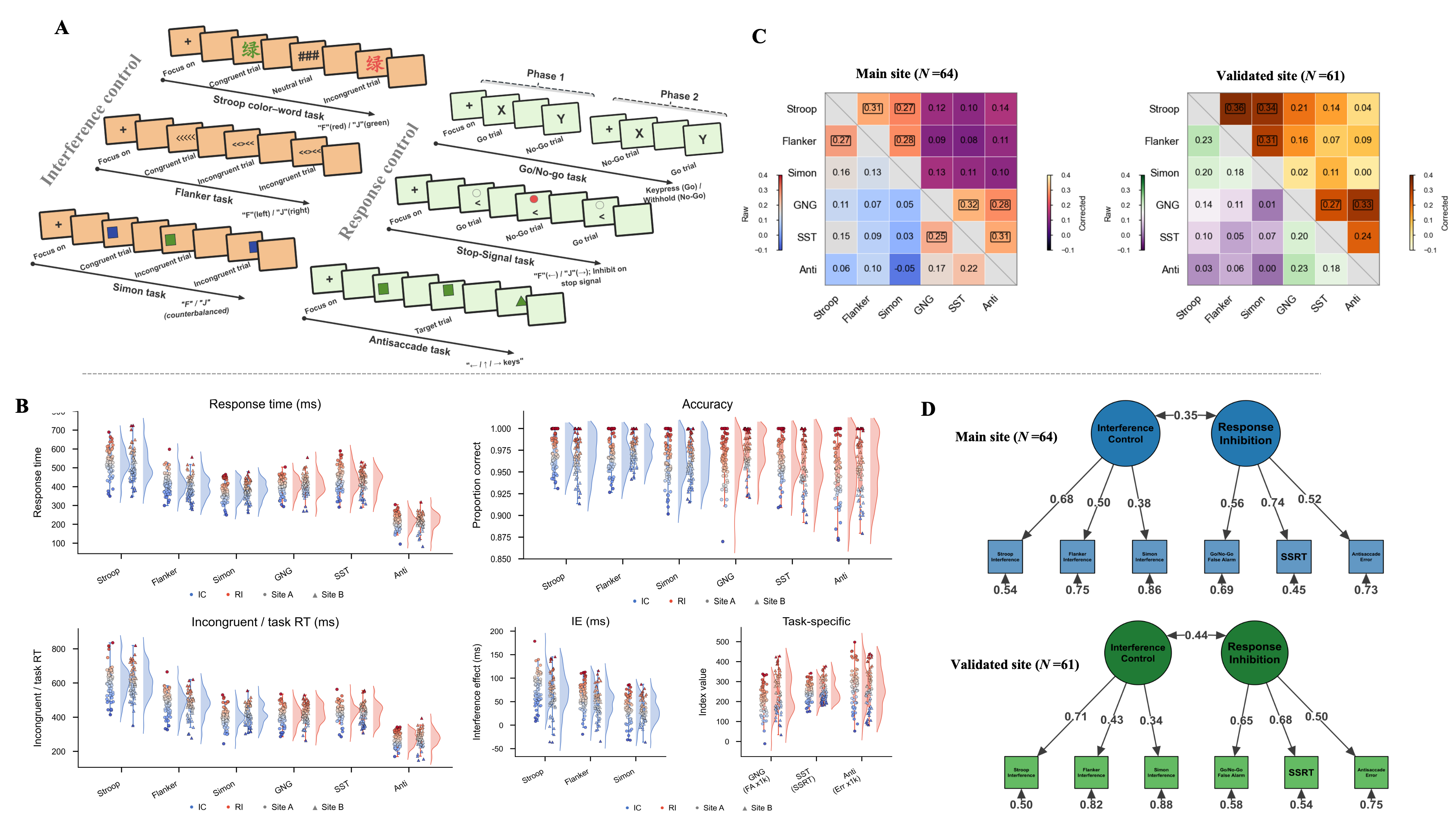
Figure 2
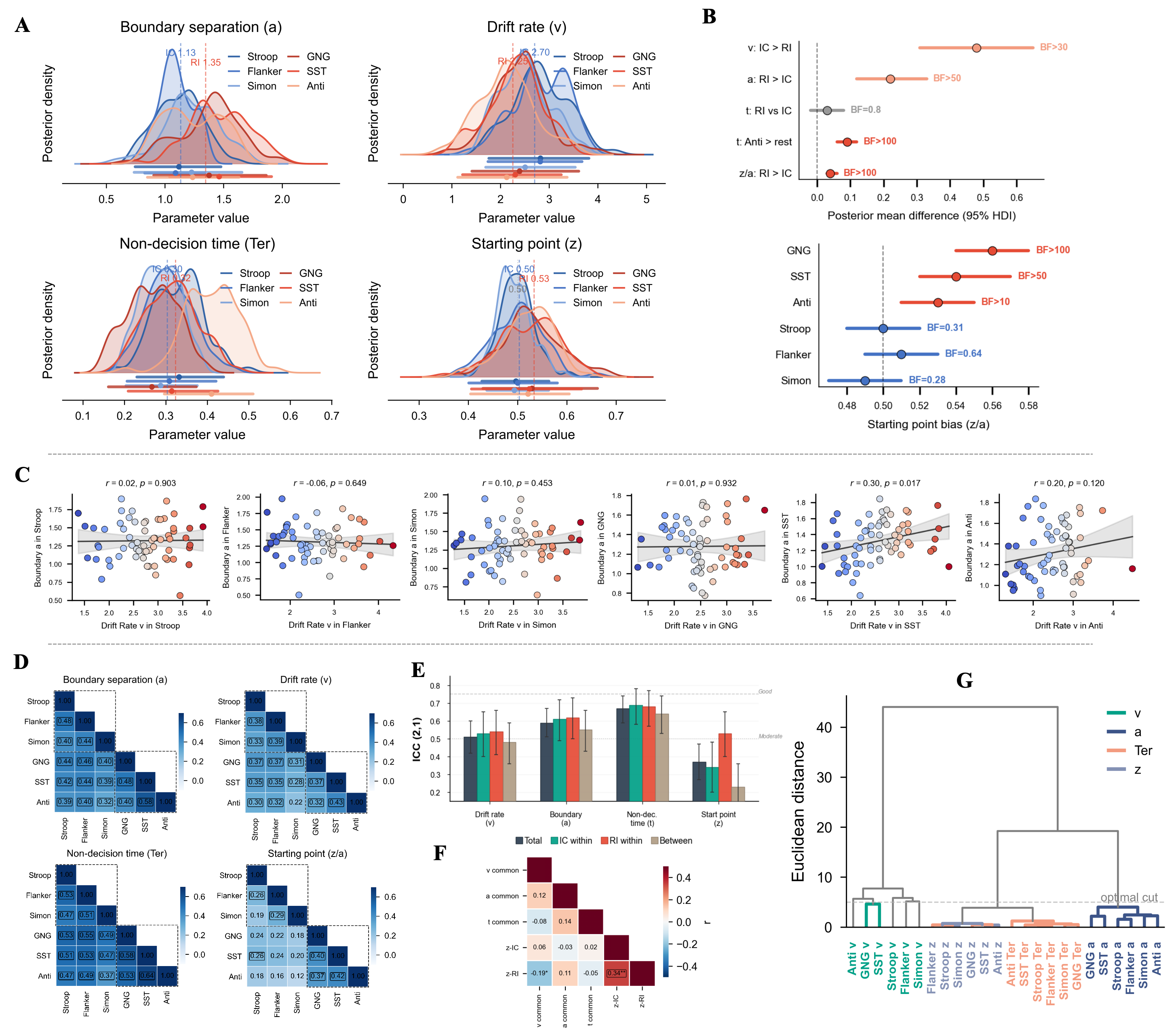
Figure 3
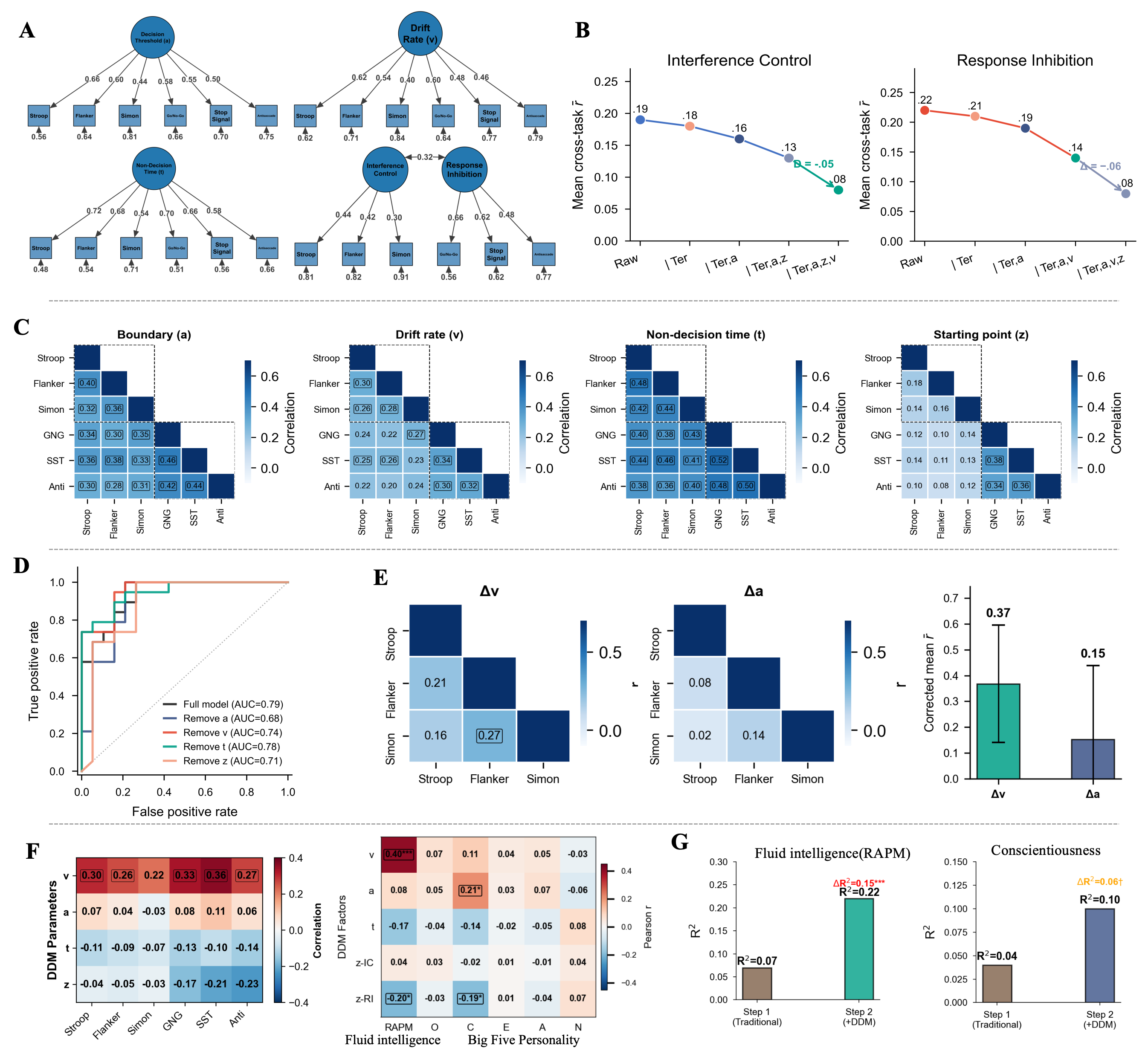
Figure 4
2026年
AcceptedComputational mechanisms of inhibitory control deficits in schizophrenia and major depressive disorder: Evidence from drift diffusion modeling
Translational Psychiatry
Figure 1
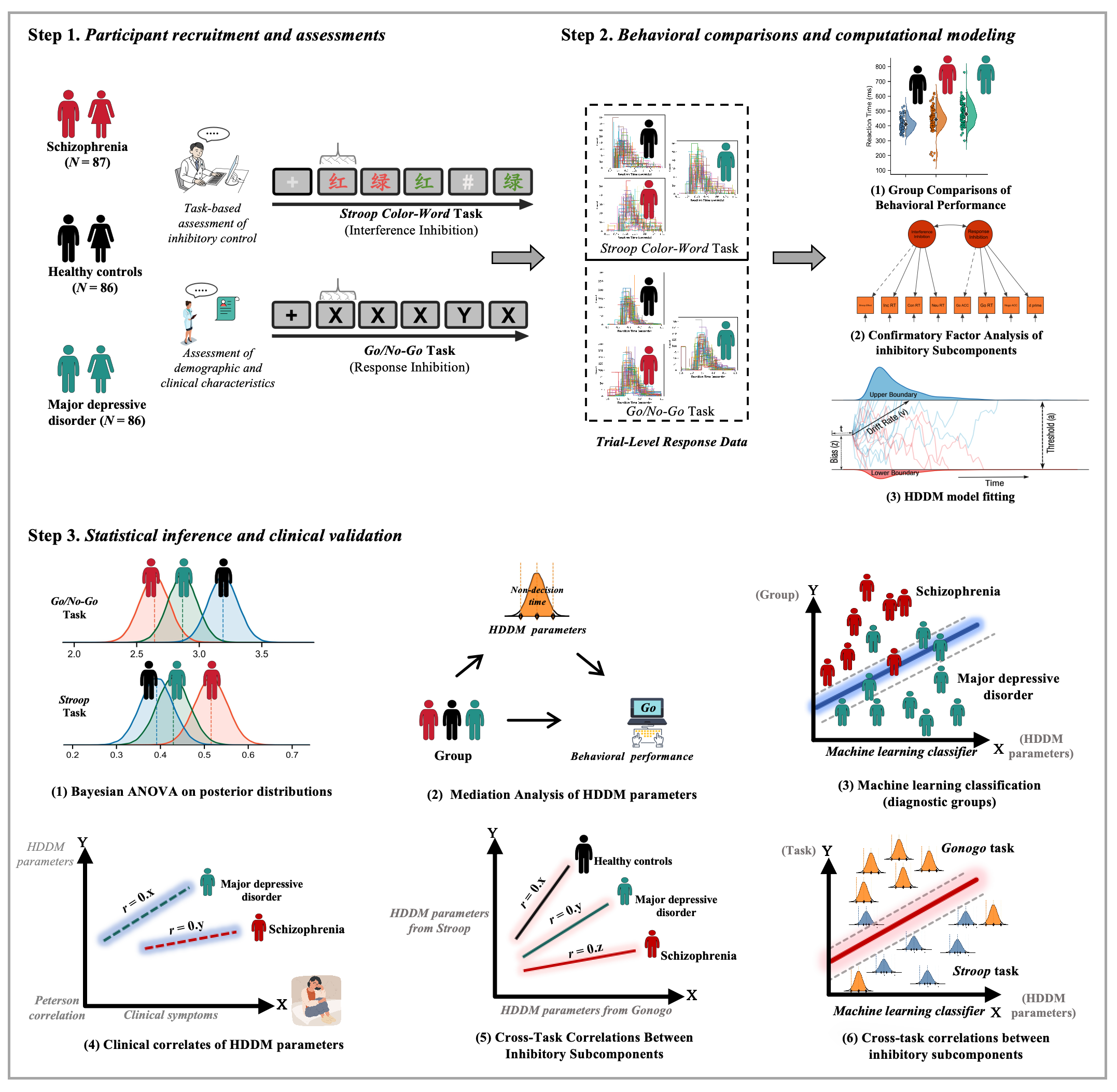
Figure 2
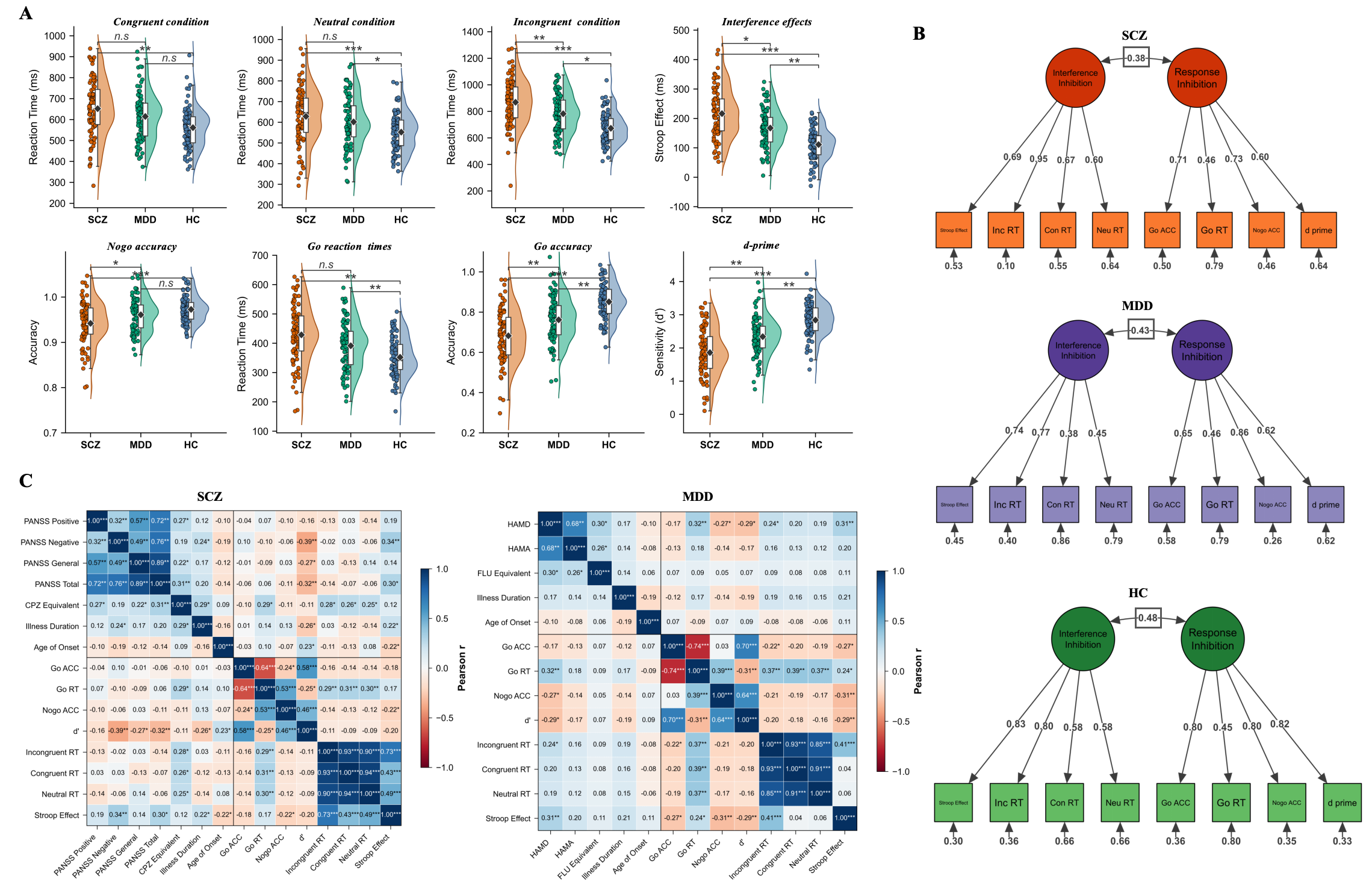
Figure 3
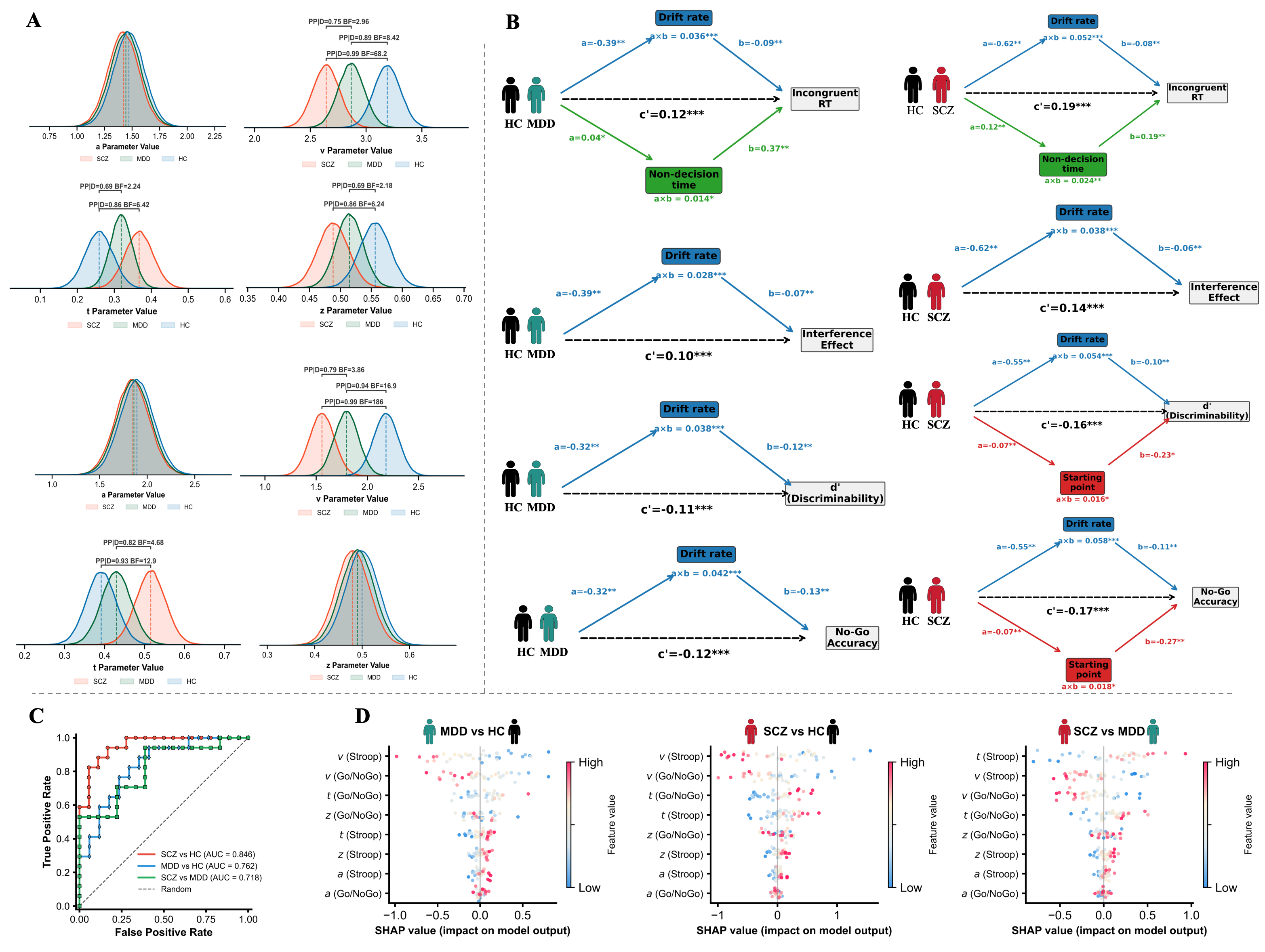
Figure 4
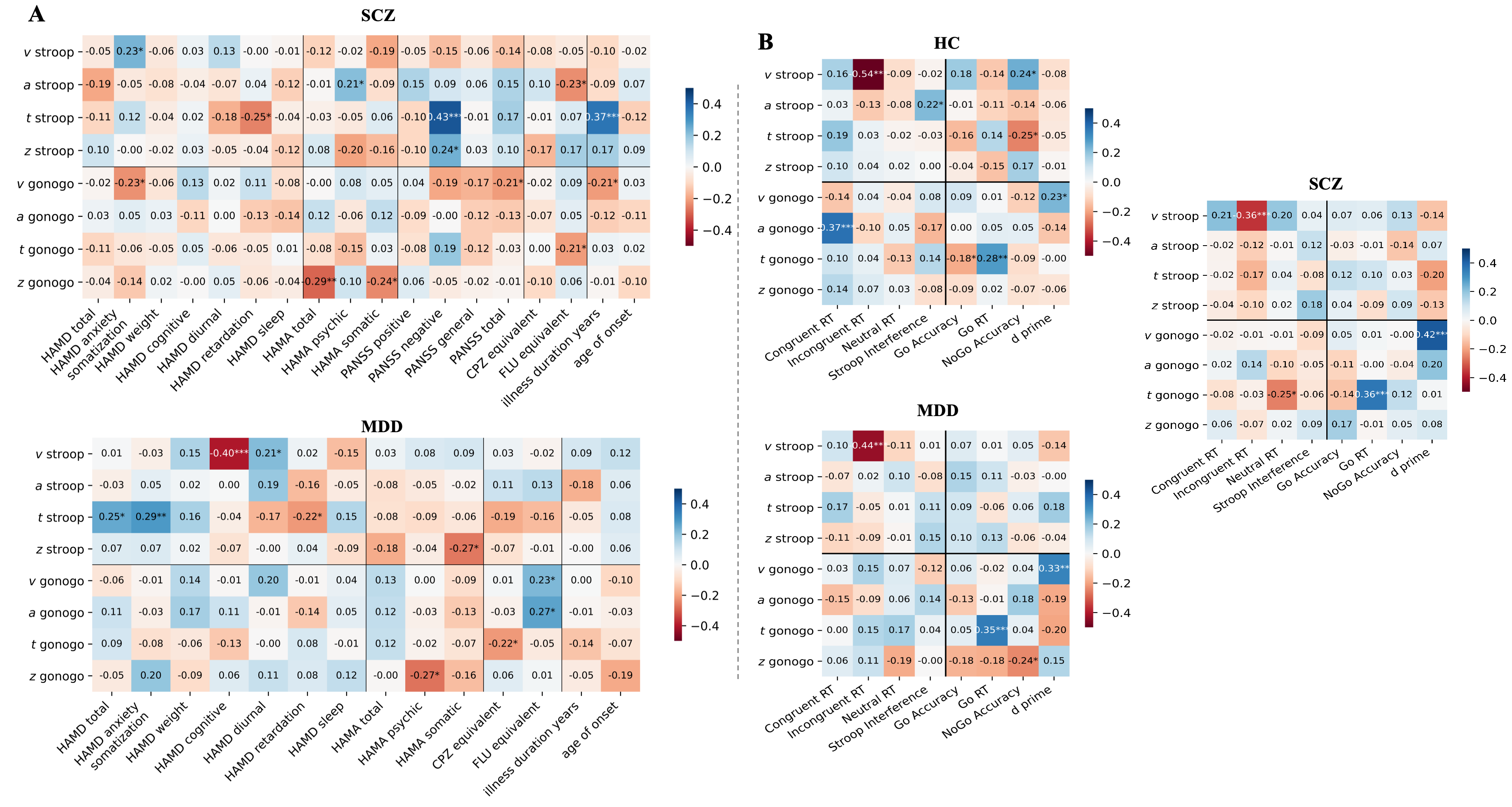
Figure 5
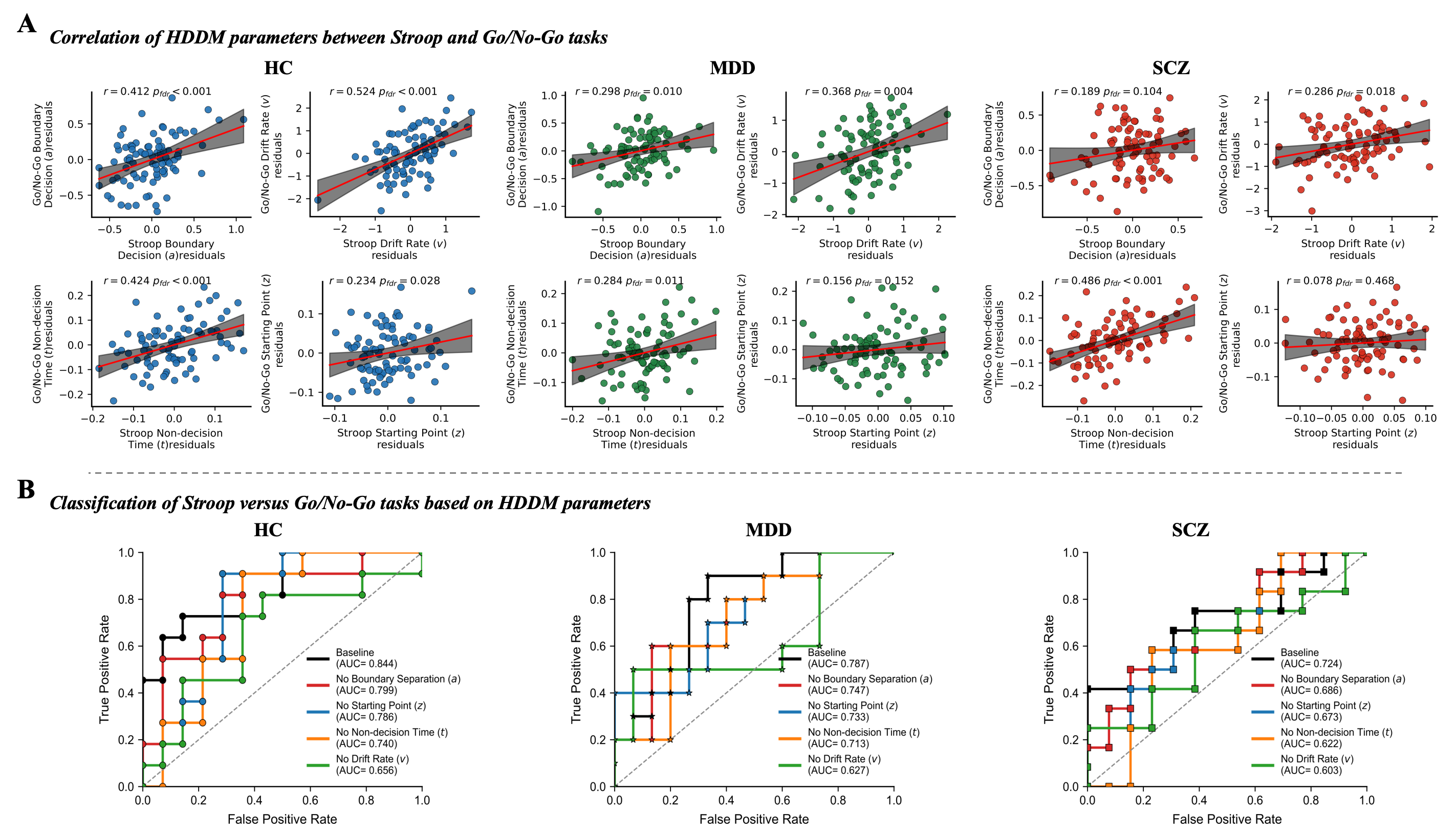
Figure 6
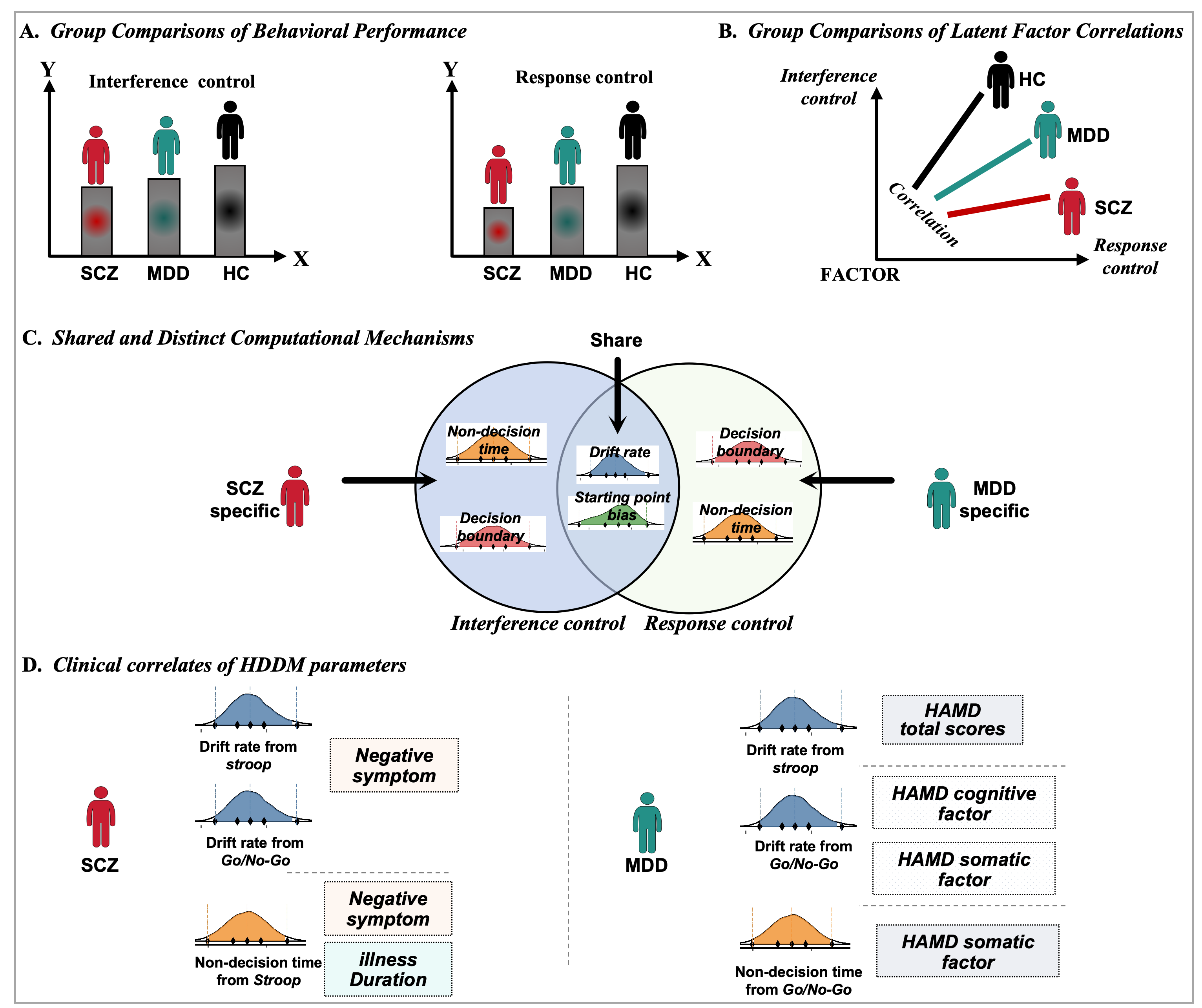
2025年
Major RevisionBoundaries of Executive Functions in Large Language Models: GPT-4o Selectively Replicates Human Performance
Submitted to Cognitive Science
查看摘要
Abstract: Large language models (LLMs) have demonstrated considerable capabilities in complex reasoning and problem-solving tasks that, in humans, depend on executive functions (EFs). However, the extent to which these models replicate human EF patterns remains unclear. We systematically evaluated GPT-4o's performance across three core EF dimensions—inhibitory control, working memory, and cognitive flexibility—using established behavioral paradigms. Additionally, we examined whether model-internal log probability parameters could serve as quantitative indicators of cognitive processing analogous to human neural activity. Using two independent datasets (N₁=1,970; N₂=39), we simulated trial-by-trial responses through GPT-4o while recording log probability metrics. Bayesian analyses revealed selective replication of human EF patterns. GPT-4o successfully reproduced human-like performance in interference inhibition (stroop), working memory capacity (digit span), and working memory updating (n-back). In contrast, the model showed divergent patterns in response inhibition (Go/No-Go), time-sensitive working memory updating (running memory task with presentation times of 1750 ms and 750 ms), and cognitive flexibility (number-switching task). Log probability parameters demonstrated task-specific associations with behavioral measures and corresponded with activation patterns in EF-related brain regions during working memory and task-switching paradigms. These findings suggest that GPT-4o captures specific aspects of human EF, particularly those involving symbolic representation and static information maintenance, while showing limitations in dynamic control and temporal processing. This selective replication pattern provides insights into both the computational basis of EF and the cognitive boundaries of current LLM architectures. Our results indicate that log probability parameters may offer a window into LLM cognitive processing, providing a methodological framework for evaluating artificial cognitive mechanisms.
Figure 1
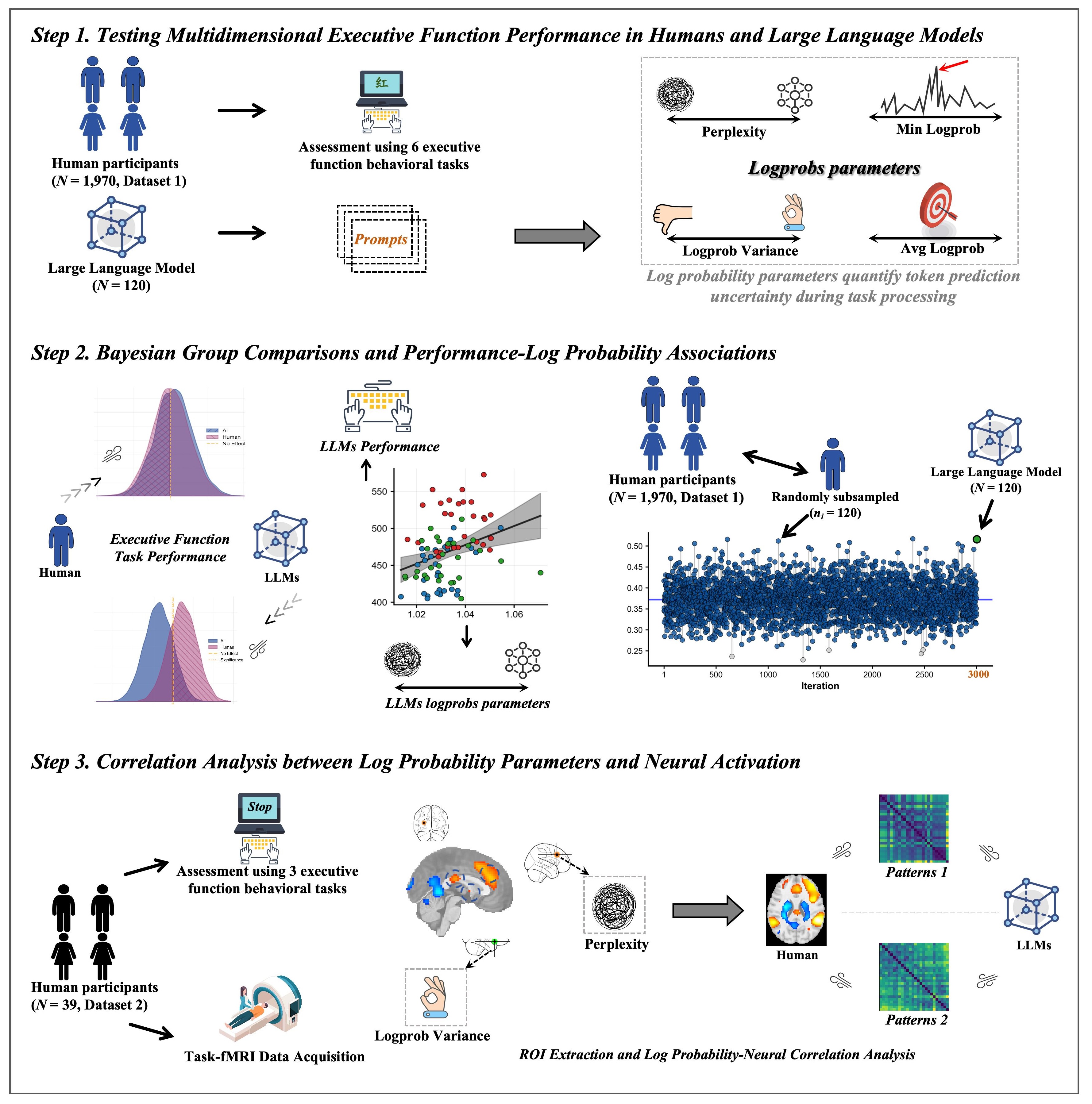
Figure 2
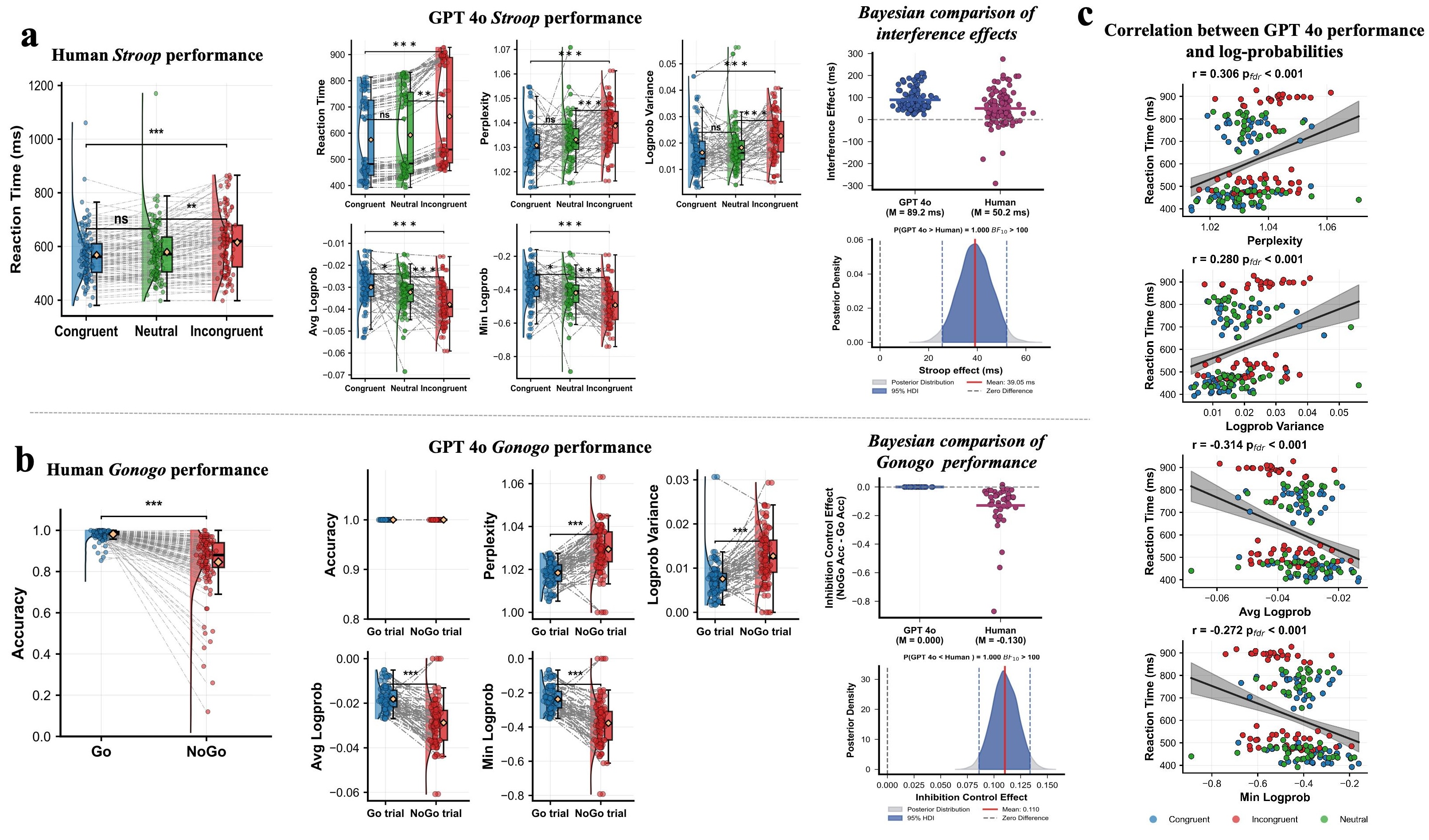
Figure 3
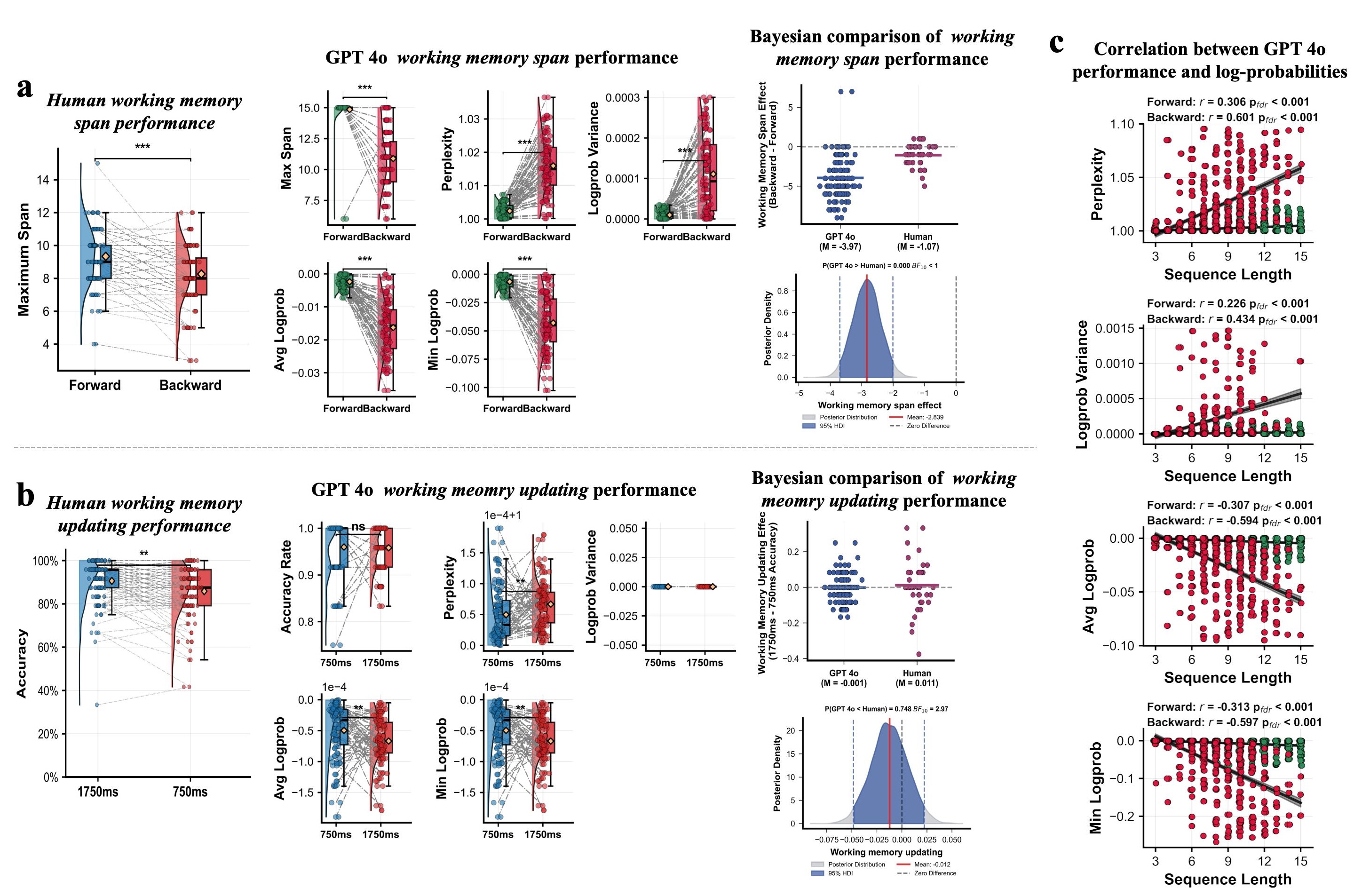
Figure 4
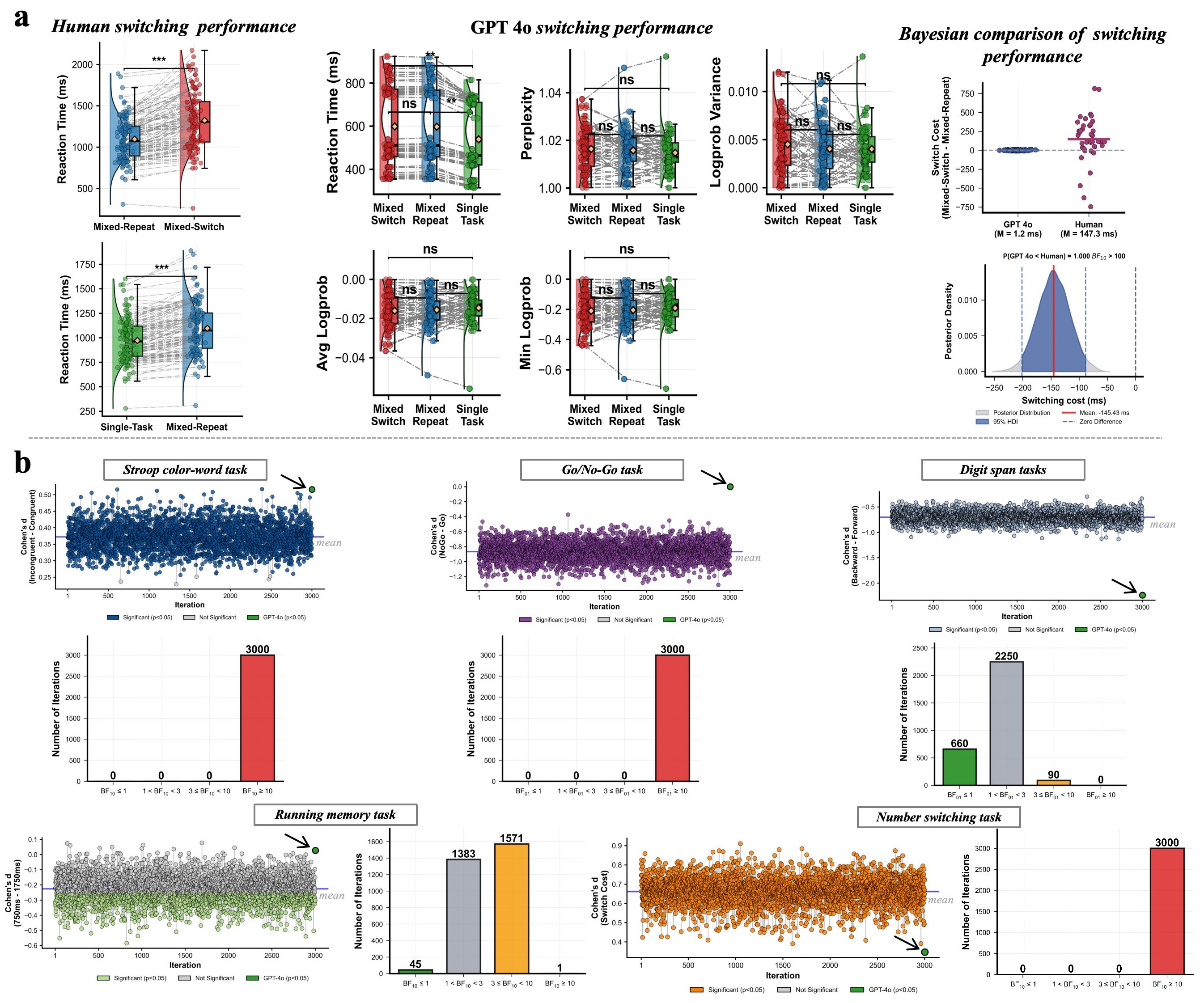
Figure 5
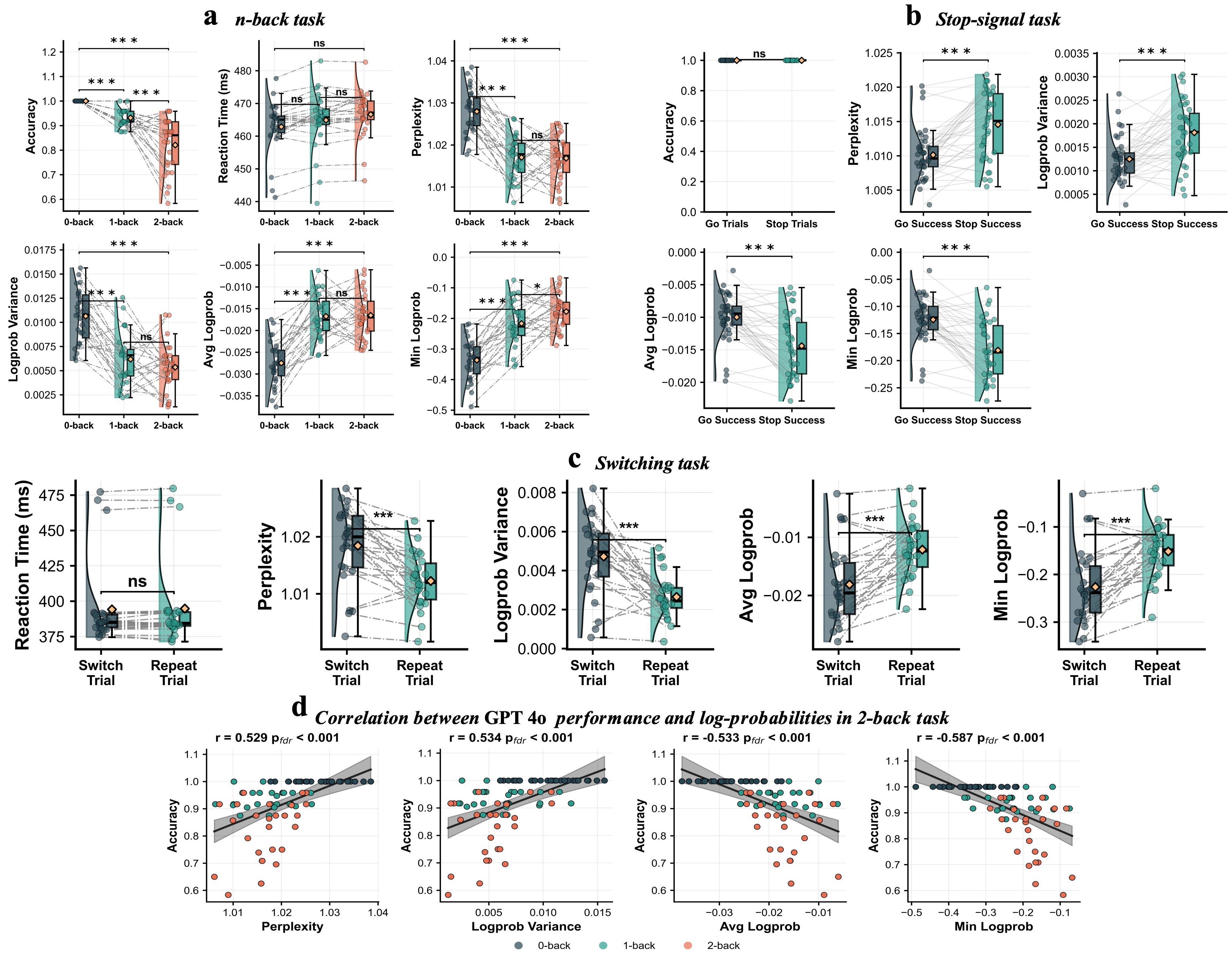
Figure 6
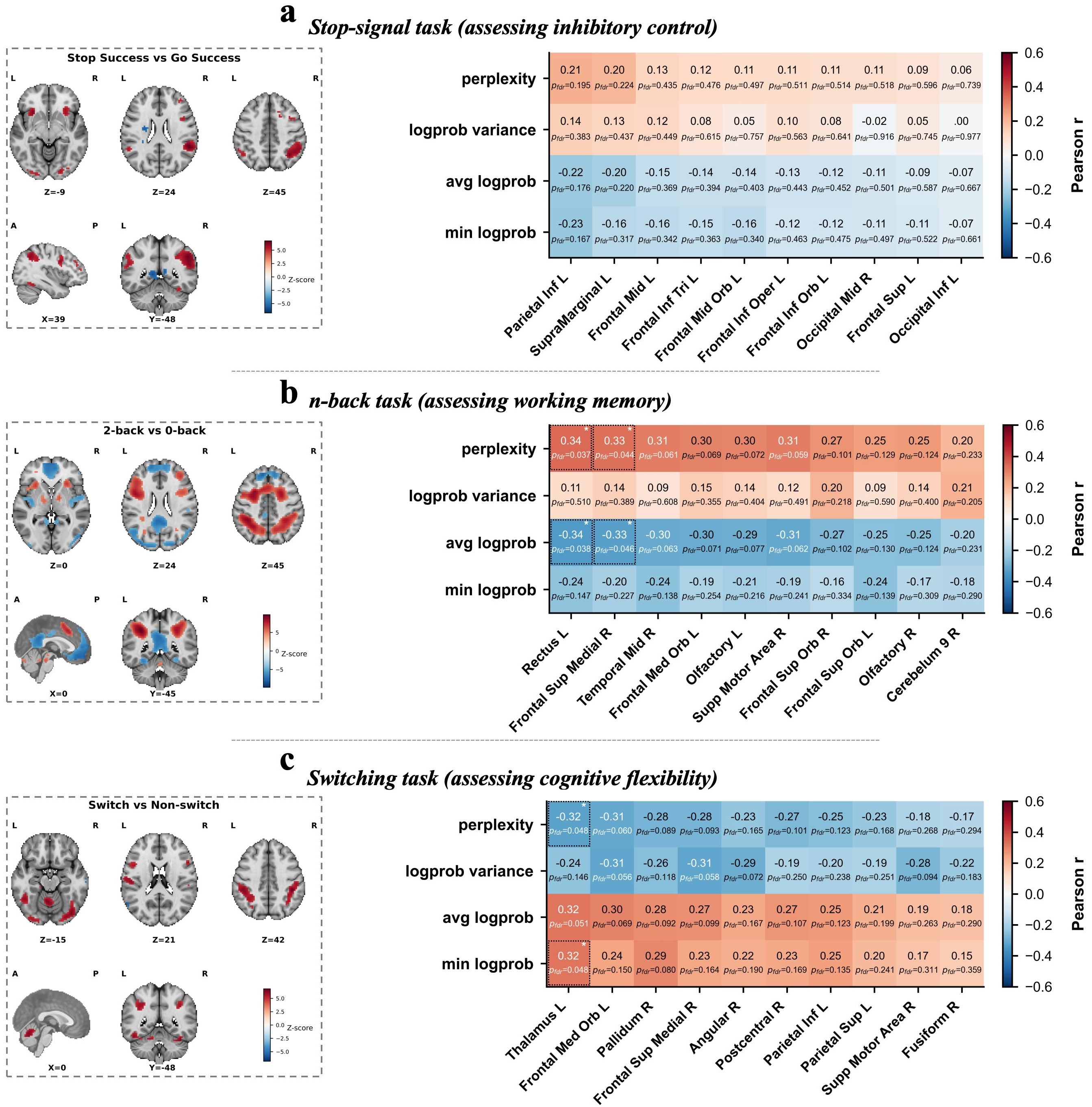
2026年-7月
PublishedZhang, T., Gong, Y., & Zhao, X. (2026). Two systems, two timelines: Computational evidence for dissociable development in inhibitory control across childhood and adolescence. Child Development, aacag107. https://doi.org/10.1093/chidev/aacag107
查看摘要
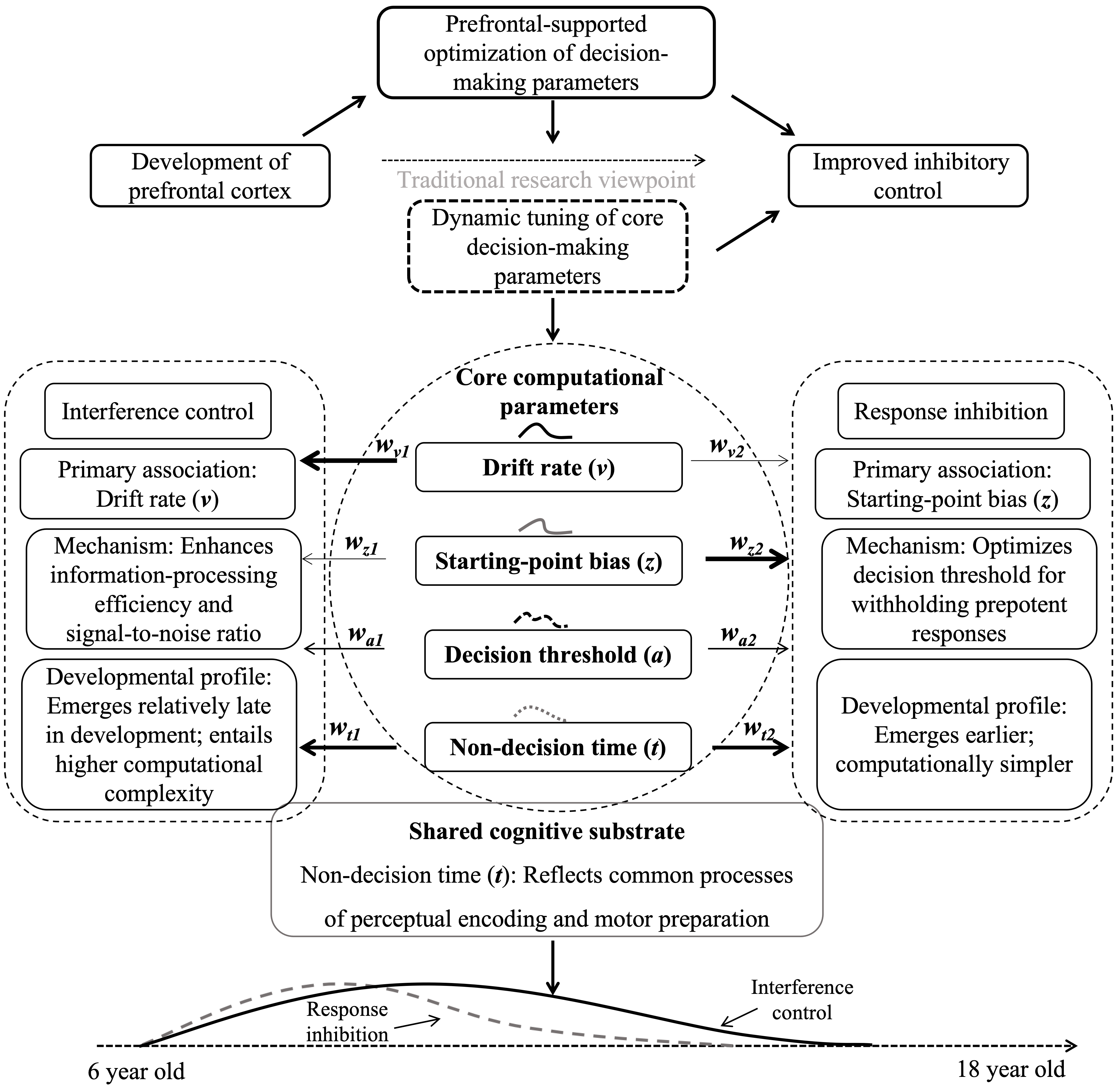
Abstract: This study examined inhibitory control development in two samples of Chinese children: a primary sample (n = 1,122; 45.5% female; 91.9% Han, Mage = 12.42 years, range: 6.0–18.7) with 6-month longitudinal follow-up and an independent replication sample (n = 1,026; 45.1% female; 90.8% Han, Mage = 12.44 years, range: 6.1–18.8). Generalized Additive Models applied to Stroop and Go/No-Go tasks revealed four-phase nonlinear developmental trajectories. Response inhibition stabilized by 13.4 years, while interference inhibition developed until 15.8 years. Hierarchical drift diffusion modeling showed that interference inhibition developed through enhanced information accumulation (drift rate), whereas response inhibition developed through enhanced response bias control (starting point). Age-related processing speed improvements suggest shared foundational mechanisms. The findings contribute to a decision-computational framework.
Figure 1
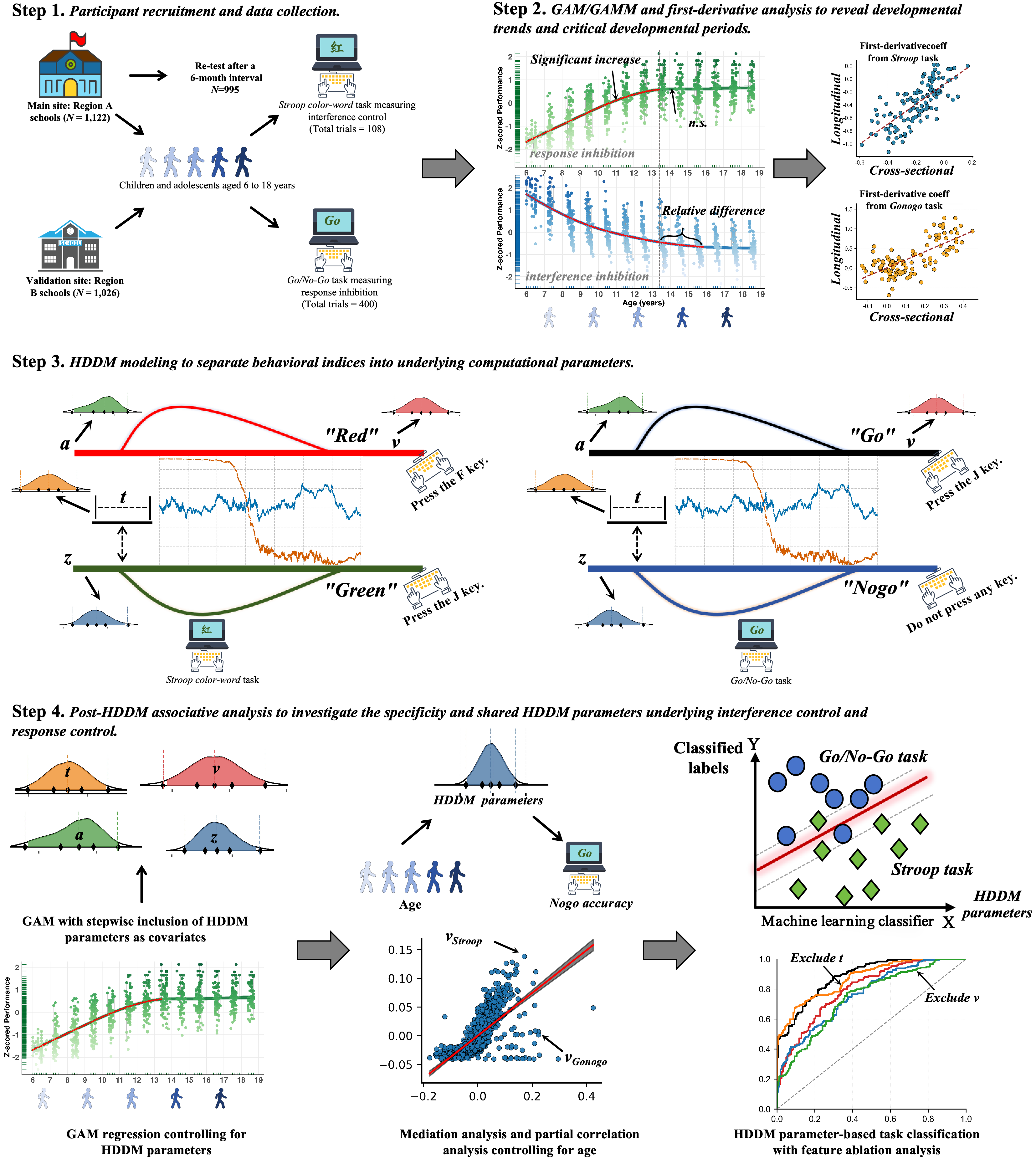
Figure 2
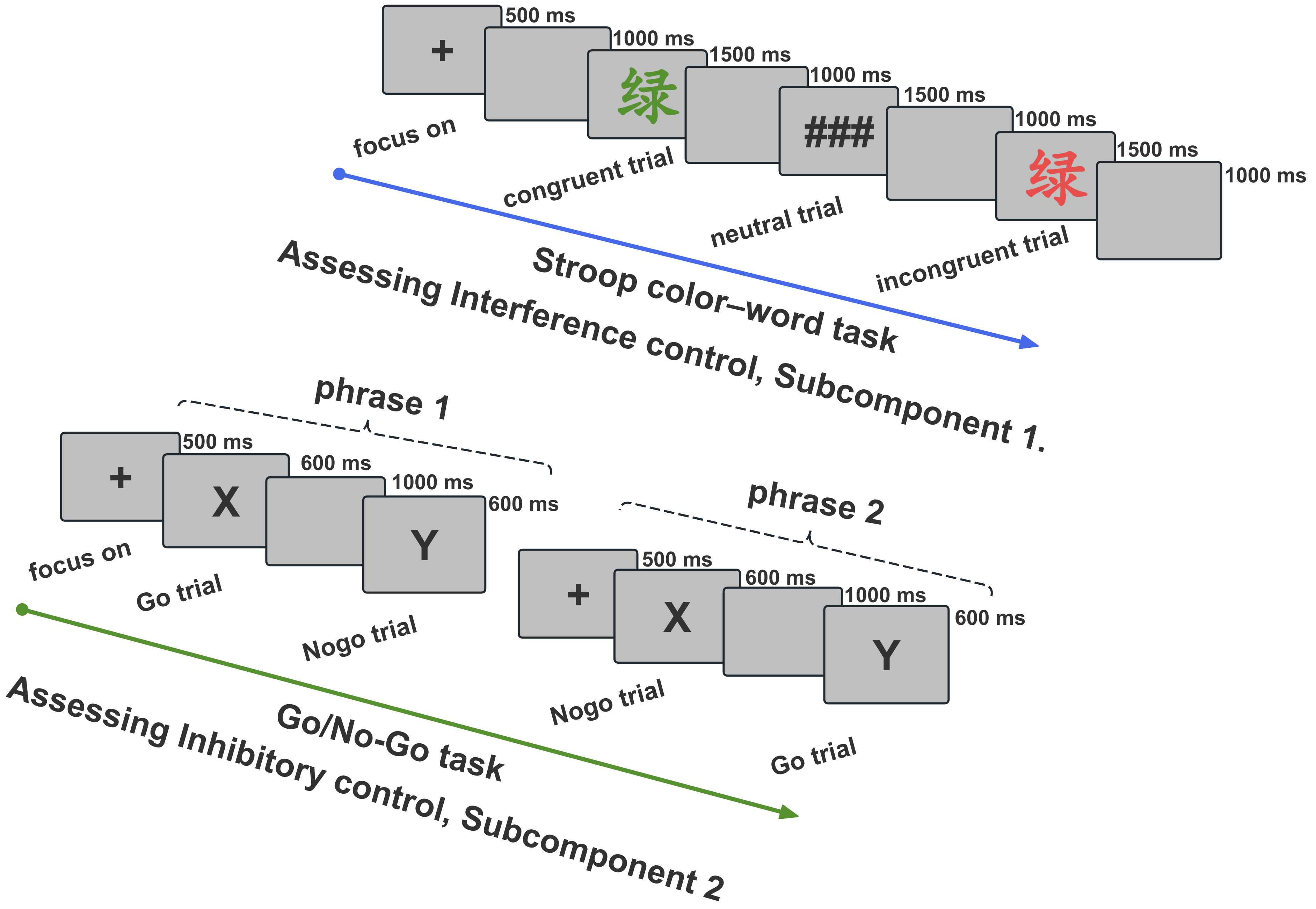
Figure 3
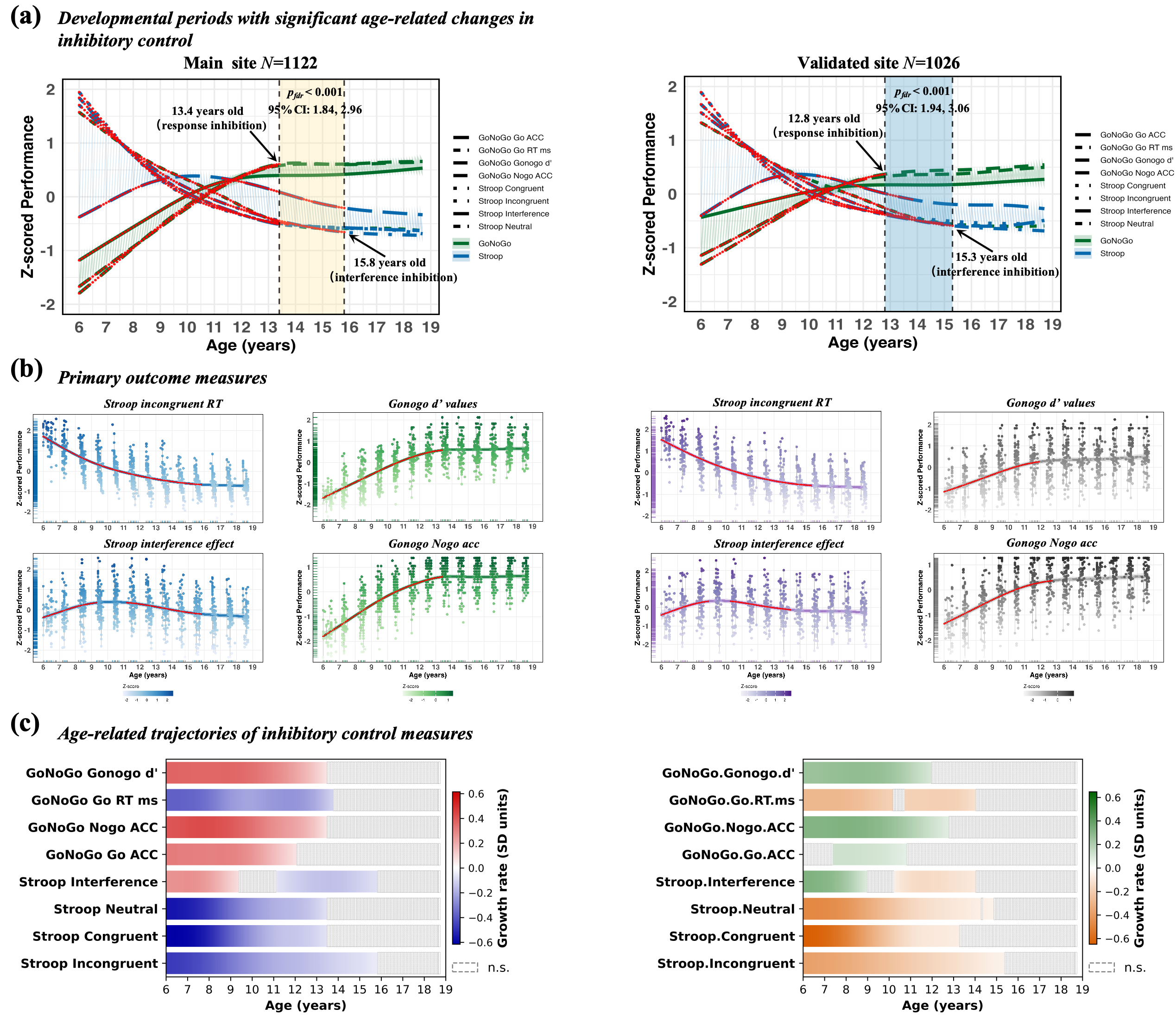
Figure 4
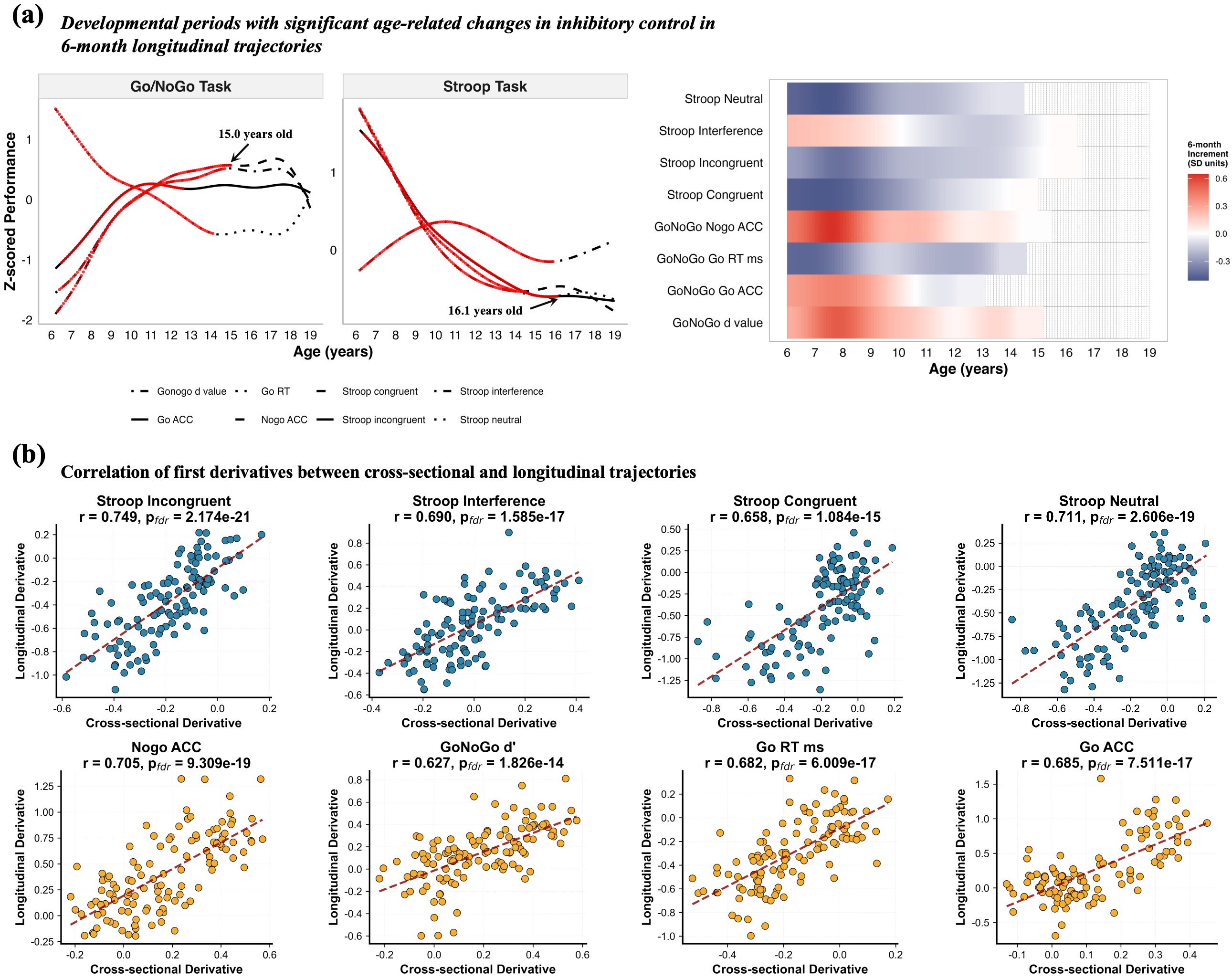
Figure 5
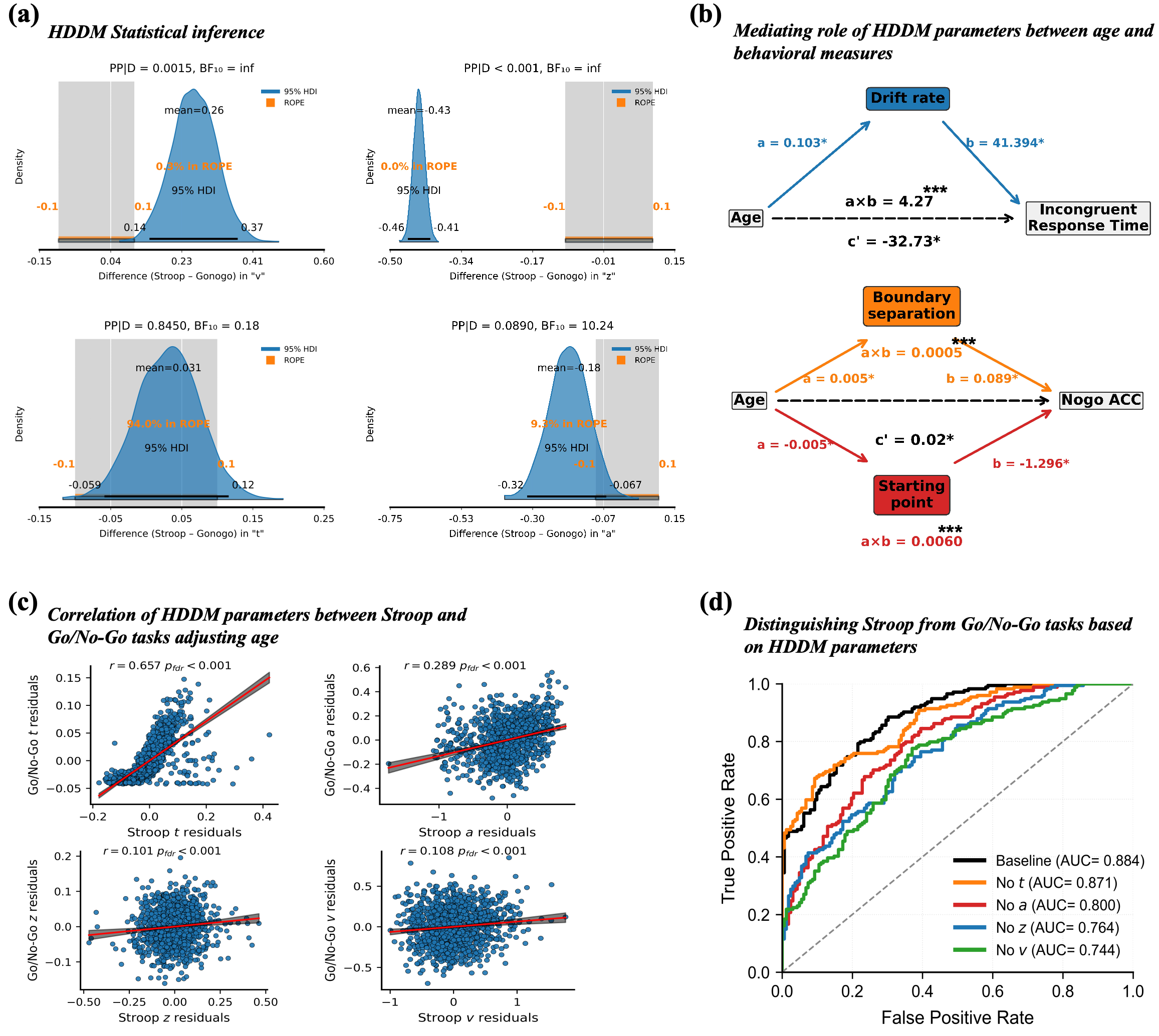
Figure 6
2025年
AcceptedHeterogeneous executive functions in schizophrenia delineate patient subtypes with different symptom profiles, inflammatory levels, and treatment responses
BMC Medicine
查看摘要
Introduction: Executive function (EF) is a heterogeneous neuropsychological construct, and impairments in EF dimensions represent a core aspect of psychopathology in schizophrenia that vary across individual patients. Currently, how this inter-individual variability characterizes schizophrenia subgroups, along with their distinctions in clinical characteristics and prognostic outcomes, remains unclear.
Methods: Three EF dimensions (inhibitory control, working memory, cognitive flexibility) were assessed in the main sample (N=329), its follow-up subset, and an independently "recurring local validation" patient sample (N=114). Fuzzy clustering was applied to baseline EF assessments to discover and validate the core subtypes after excluding cluster-ambiguous cases in the main and independent samples, respectively. Subtype-based classification trained on the main sample was then tested in the independent sample. Importantly, the stability of these subtypes and their remission statuses, along with associated longitudinal changes in clinical and biological factors, were evaluated, and baseline subtype memberships were also used to predict outcomes.
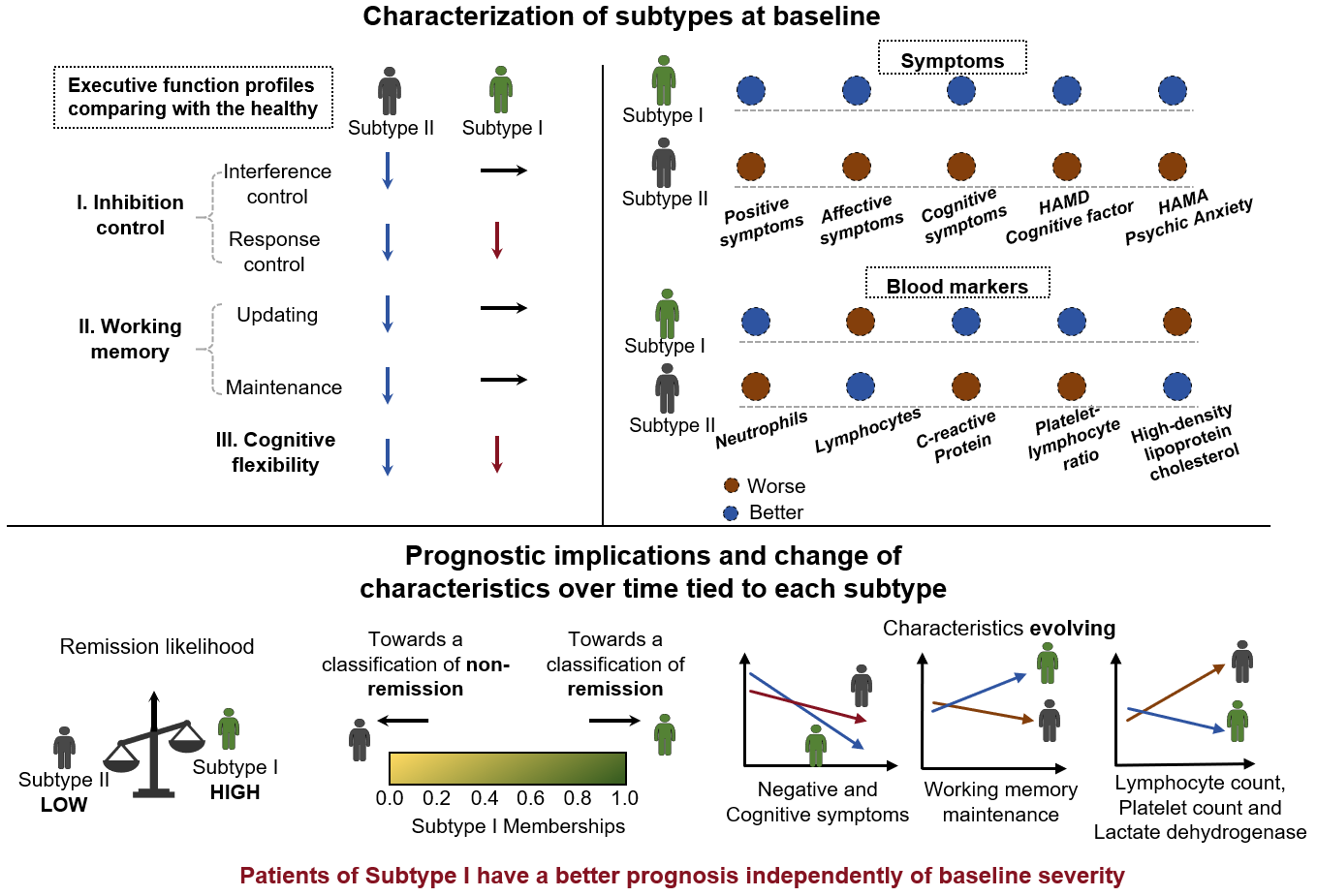
Results: Two longitudinally stable, independently validated core EF subtypes were identified, with significantly variable baseline positive, affective, and cognitive symptoms; working memory updating functioning; and peripheral inflammatory and metabolic levels. This two-subtype differentiation allowed an accurate classification of novel patients' subtype memberships and patients' remission statuses not due to overall severity at intake. Remitted patients experienced significantly greater reductions in negative and cognitive symptoms, improved working memory maintenance, lower peripheral inflammatory levels, and more-superior metabolic functions over time.
Conclusions: EF subtyping successfully captured the symptomatic, biochemical, and prognostic variations in individuals with schizophrenia, which could help to stratify patients with this disorder for targeted treatments.
Methods: Three EF dimensions (inhibitory control, working memory, cognitive flexibility) were assessed in the main sample (N=329), its follow-up subset, and an independently "recurring local validation" patient sample (N=114). Fuzzy clustering was applied to baseline EF assessments to discover and validate the core subtypes after excluding cluster-ambiguous cases in the main and independent samples, respectively. Subtype-based classification trained on the main sample was then tested in the independent sample. Importantly, the stability of these subtypes and their remission statuses, along with associated longitudinal changes in clinical and biological factors, were evaluated, and baseline subtype memberships were also used to predict outcomes.
Results: Two longitudinally stable, independently validated core EF subtypes were identified, with significantly variable baseline positive, affective, and cognitive symptoms; working memory updating functioning; and peripheral inflammatory and metabolic levels. This two-subtype differentiation allowed an accurate classification of novel patients' subtype memberships and patients' remission statuses not due to overall severity at intake. Remitted patients experienced significantly greater reductions in negative and cognitive symptoms, improved working memory maintenance, lower peripheral inflammatory levels, and more-superior metabolic functions over time.
Conclusions: EF subtyping successfully captured the symptomatic, biochemical, and prognostic variations in individuals with schizophrenia, which could help to stratify patients with this disorder for targeted treatments.
Figure 1
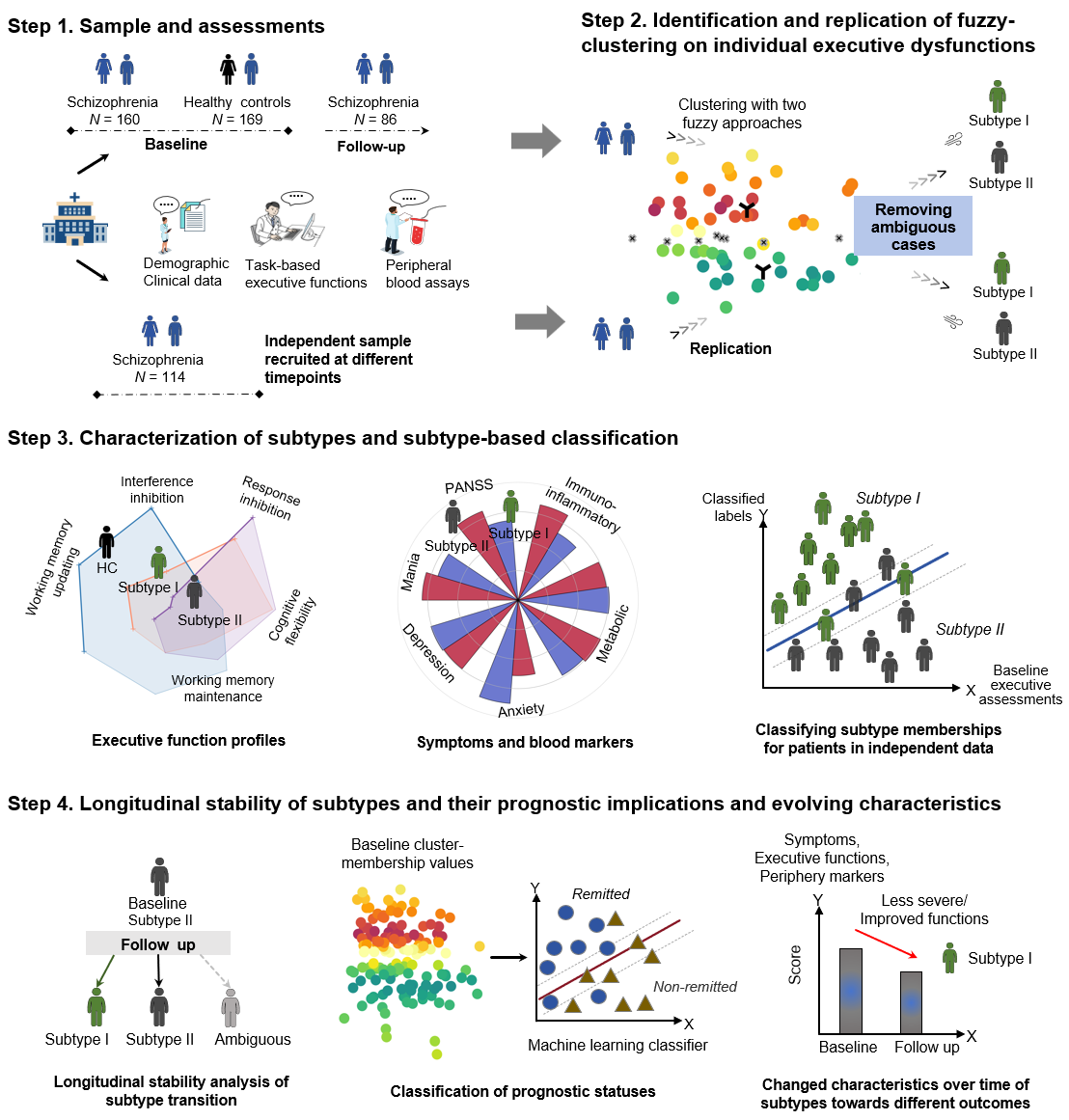
Figure 2
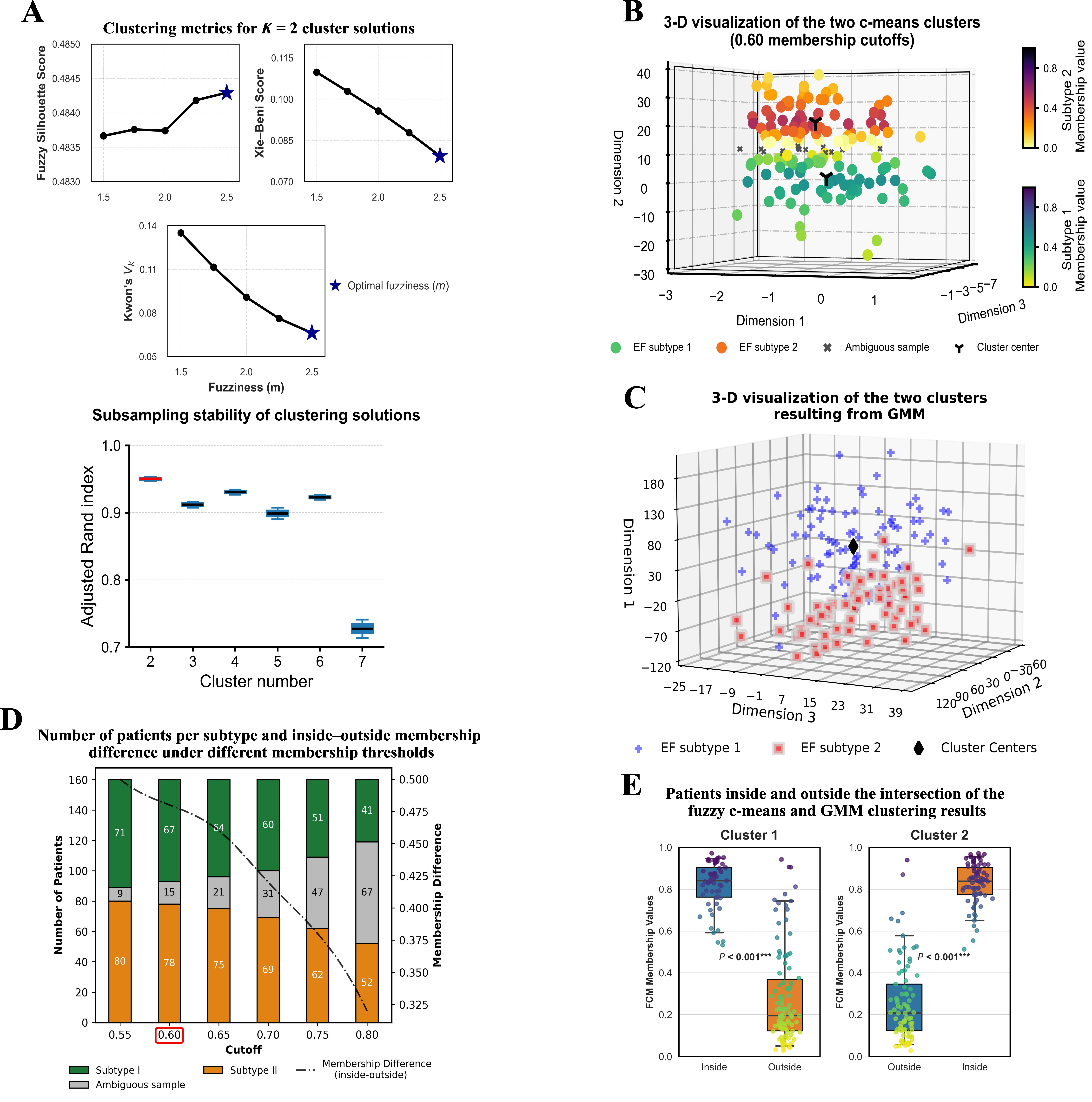
Figure 3
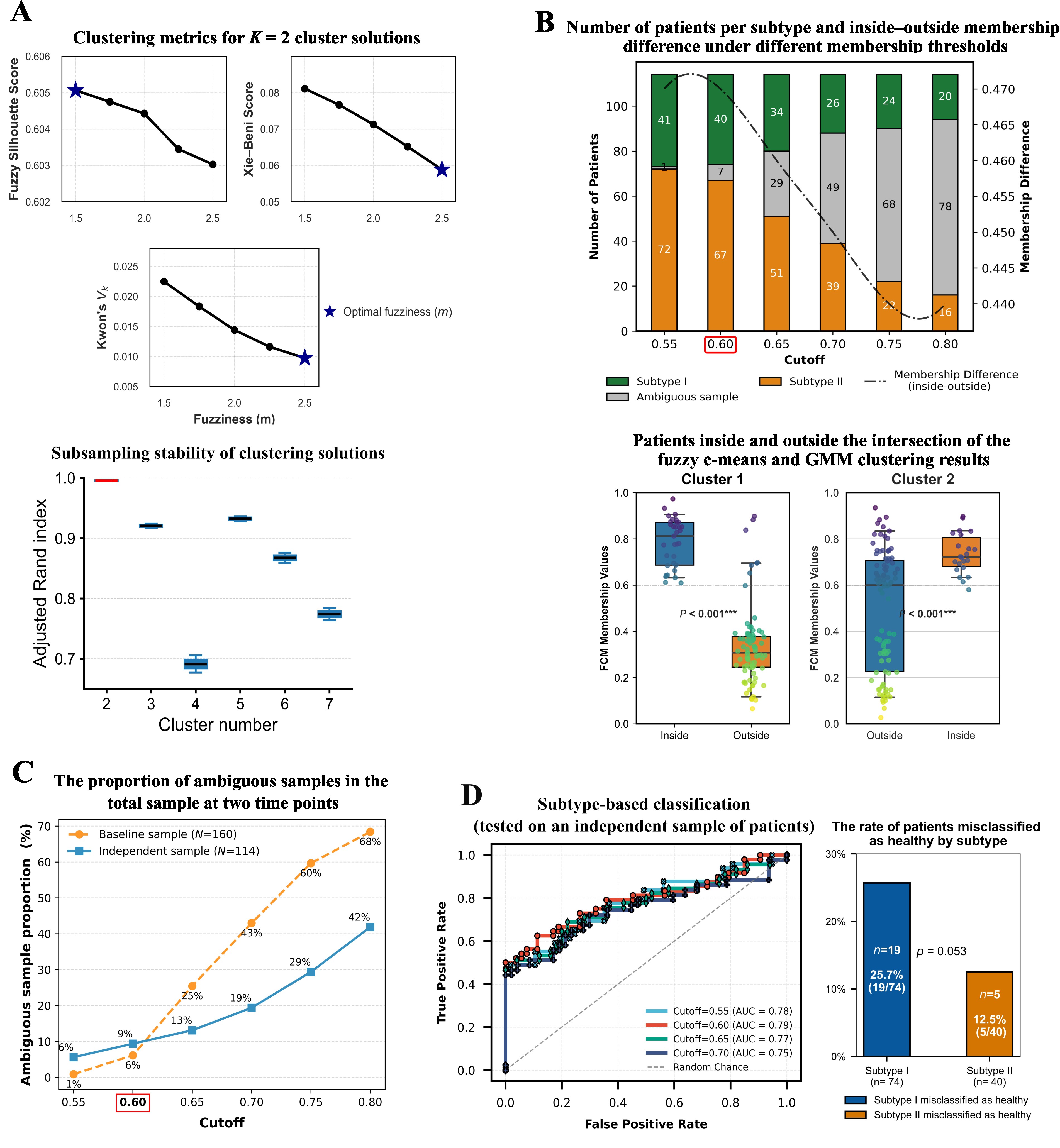
Figure 4
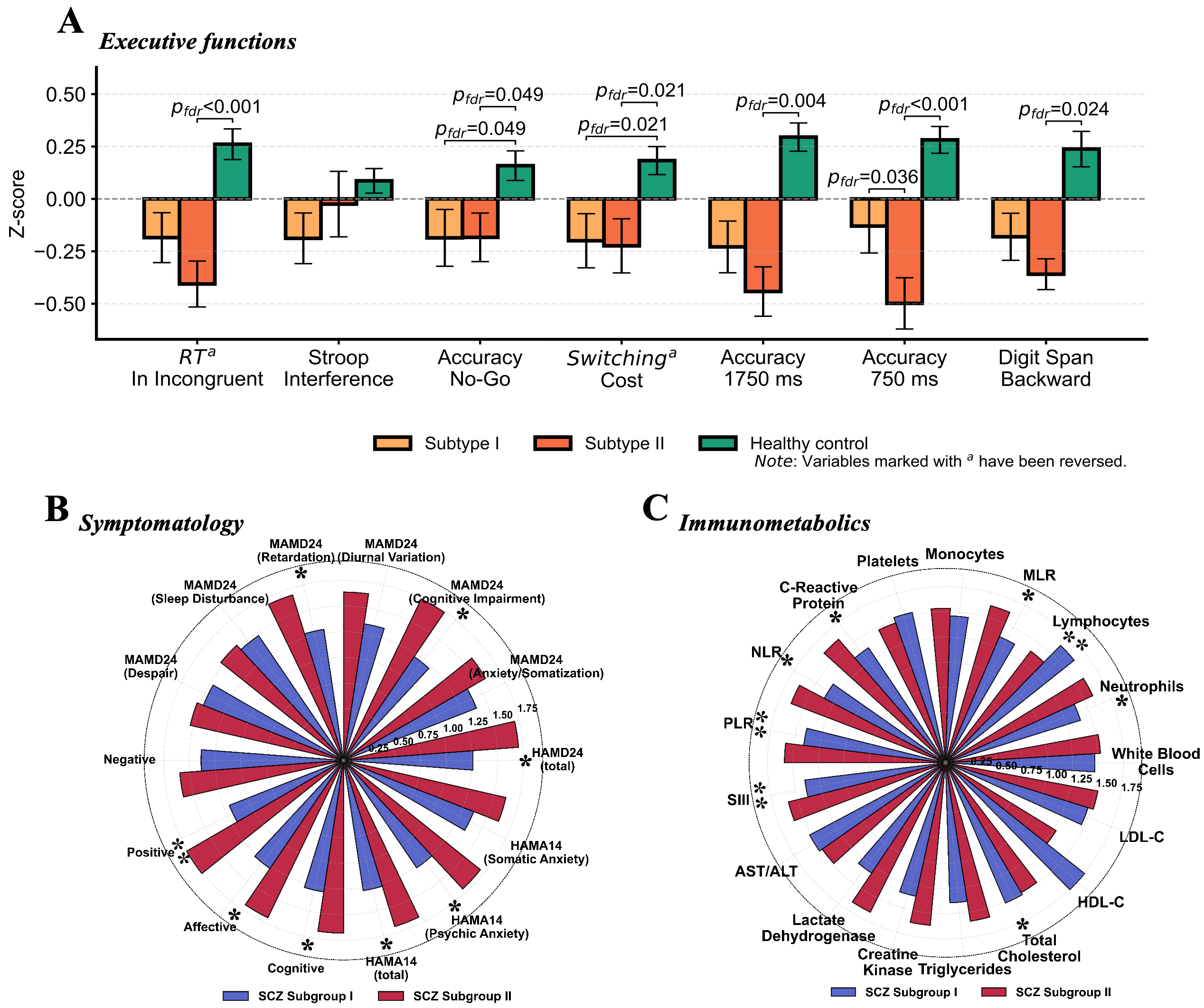
Figure 5
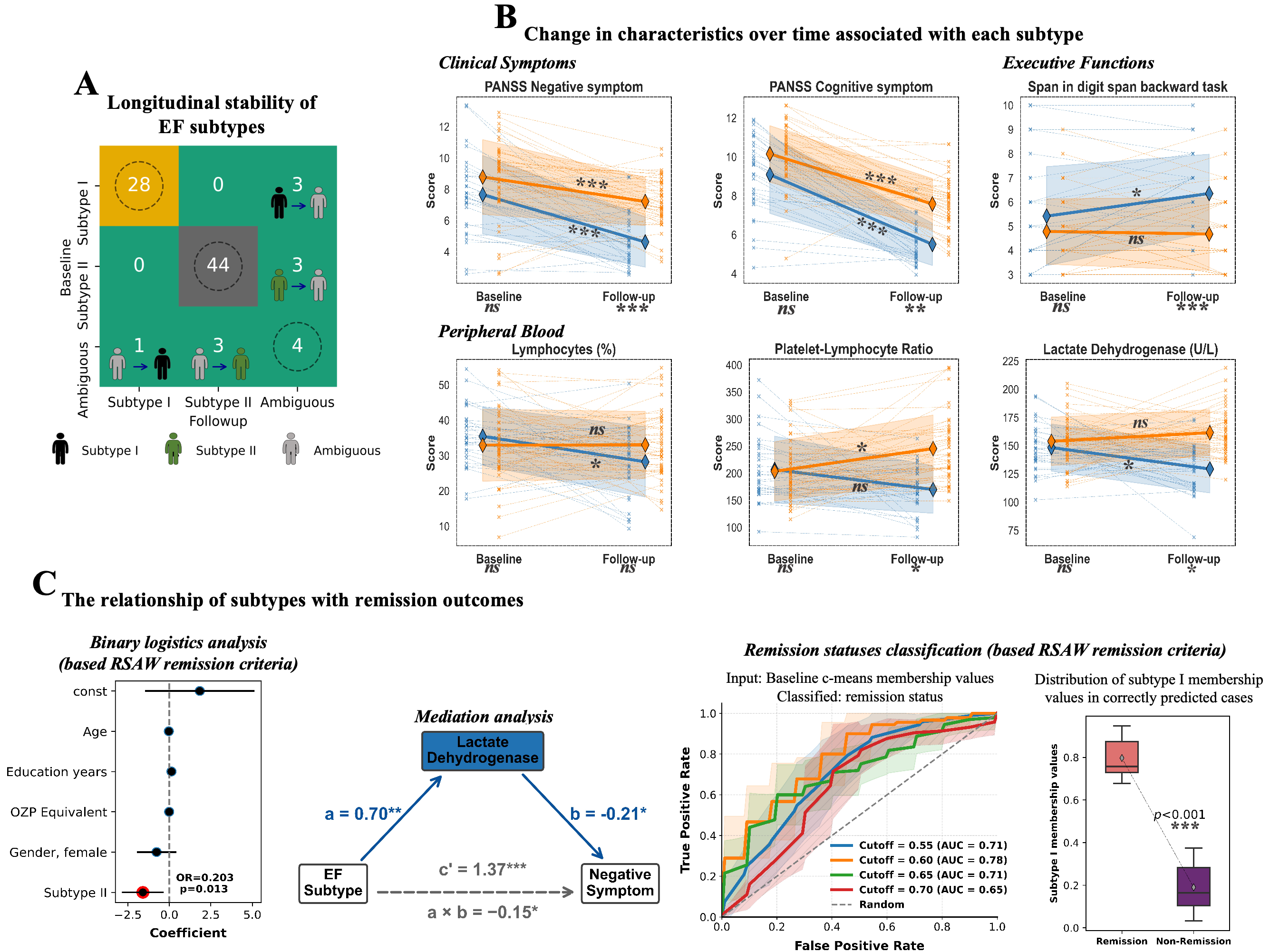
Figure 6
2026年-3月
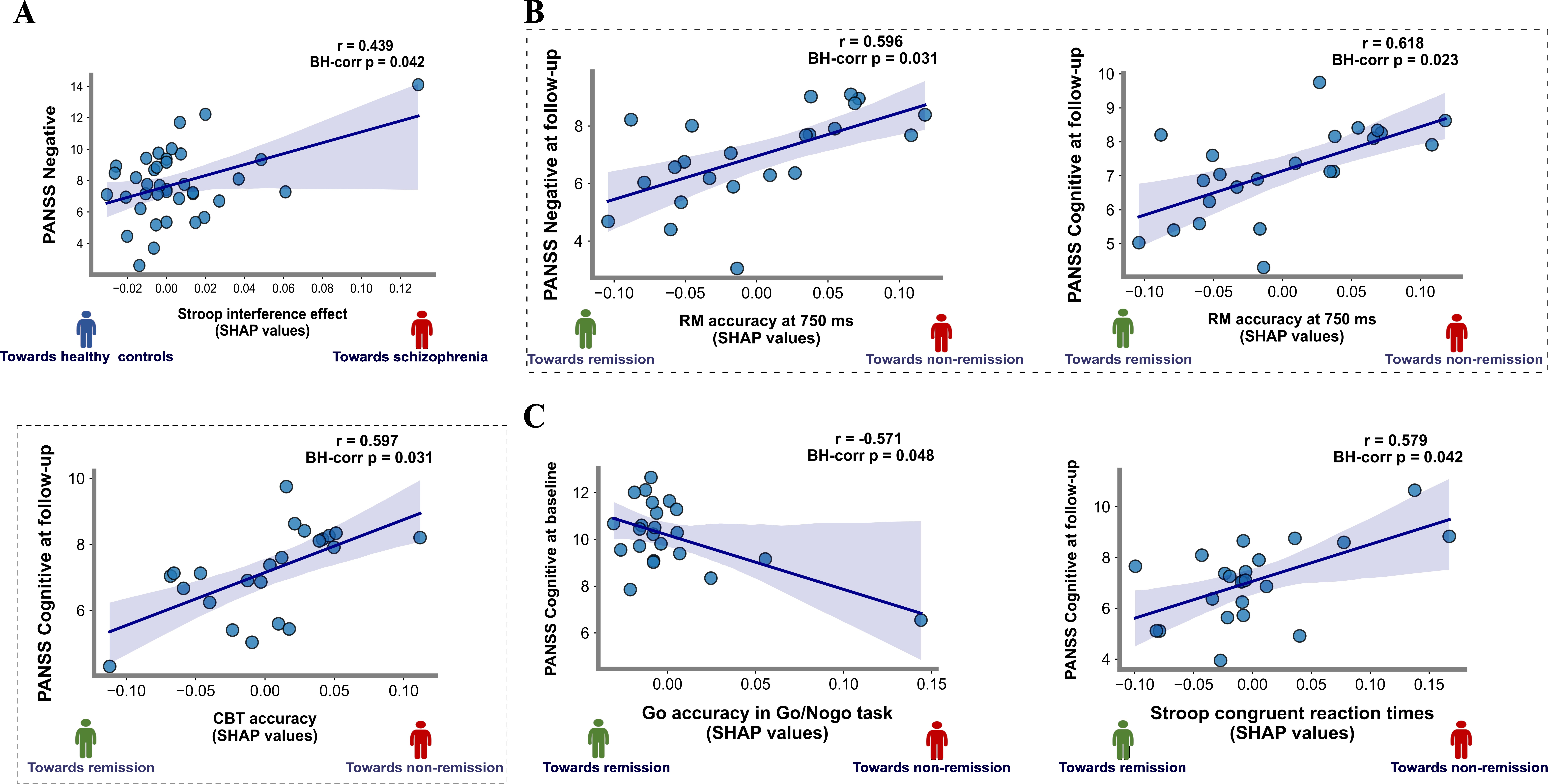
PublishedZhang, T., Zhao, X., Yeo, B. T. T., Huo, X., Eickhoff, S. B., & Chen, J. (2026). Leveraging Stacked Classifiers for Multi-task Executive Function in Schizophrenia Yields Diagnostic and Prognostic Insights. Schizophrenia Bulletin, 52(2), sbaf218. https://doi.org/10.1093/schbul/sbaf218
查看摘要
Background: Executive functioning (EF) impairments are often seen in mental disorders, particularly schizophrenia, where they relate to adverse outcomes. As a heterogeneous construct, how specifically each dimension of EF to characterize the diagnostic and prognostic aspects of schizophrenia remains opaque.
Study Design: We used classification models with a stacking approach on systematically measured EFs using 6 tasks to discriminate 195 patients with schizophrenia from healthy individuals. Baseline EF measurements were moreover employed to predict symptomatically remitted or non-remitted prognostic subgroups. EF feature importance was determined at the group-level and the ensuing individual importance scores were associated with four symptom dimensions.
Study Results: The models highlighted the importance of inhibitory control (interference and response inhibitions) or working memory in accurately identifying individuals with schizophrenia (area under the curve [AUC] = 0.87) or those in remission (AUC = 0.81). Patients who are correctly classified, in association with the contribution of interference inhibition function to our diagnostic classifier, present more severe baseline negative symptoms compared to those who are more likely to be misclassified. Also, linked to the function of working memory updating, patients who are successfully classified as remitted display milder cognitive symptoms at follow-up. Remitted patients do not differ significantly from non-remitted cases in baseline EF assessments or overall symptom severity.
Study Design: We used classification models with a stacking approach on systematically measured EFs using 6 tasks to discriminate 195 patients with schizophrenia from healthy individuals. Baseline EF measurements were moreover employed to predict symptomatically remitted or non-remitted prognostic subgroups. EF feature importance was determined at the group-level and the ensuing individual importance scores were associated with four symptom dimensions.
Study Results: The models highlighted the importance of inhibitory control (interference and response inhibitions) or working memory in accurately identifying individuals with schizophrenia (area under the curve [AUC] = 0.87) or those in remission (AUC = 0.81). Patients who are correctly classified, in association with the contribution of interference inhibition function to our diagnostic classifier, present more severe baseline negative symptoms compared to those who are more likely to be misclassified. Also, linked to the function of working memory updating, patients who are successfully classified as remitted display milder cognitive symptoms at follow-up. Remitted patients do not differ significantly from non-remitted cases in baseline EF assessments or overall symptom severity.
Figure 1
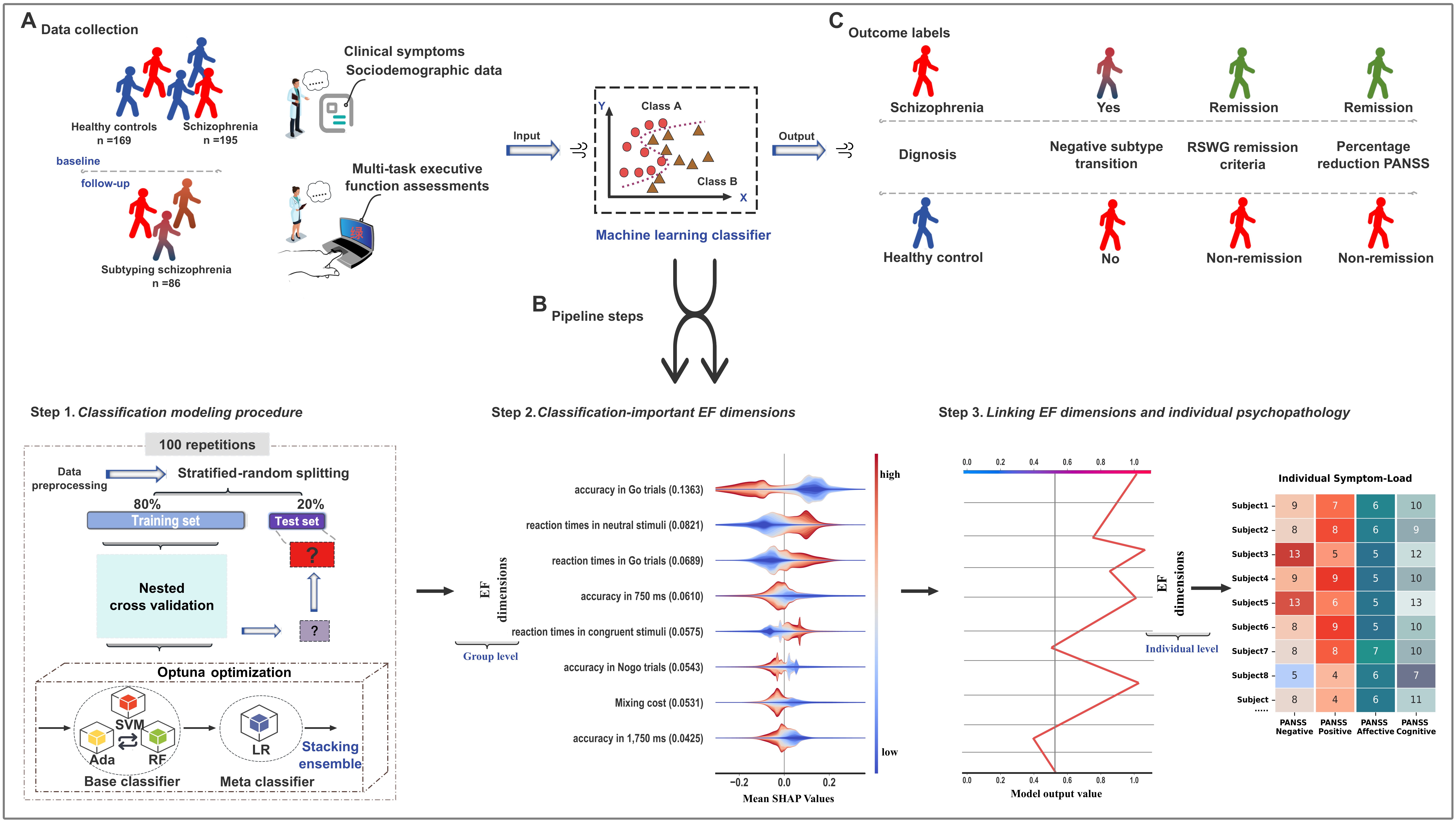
Figure 2
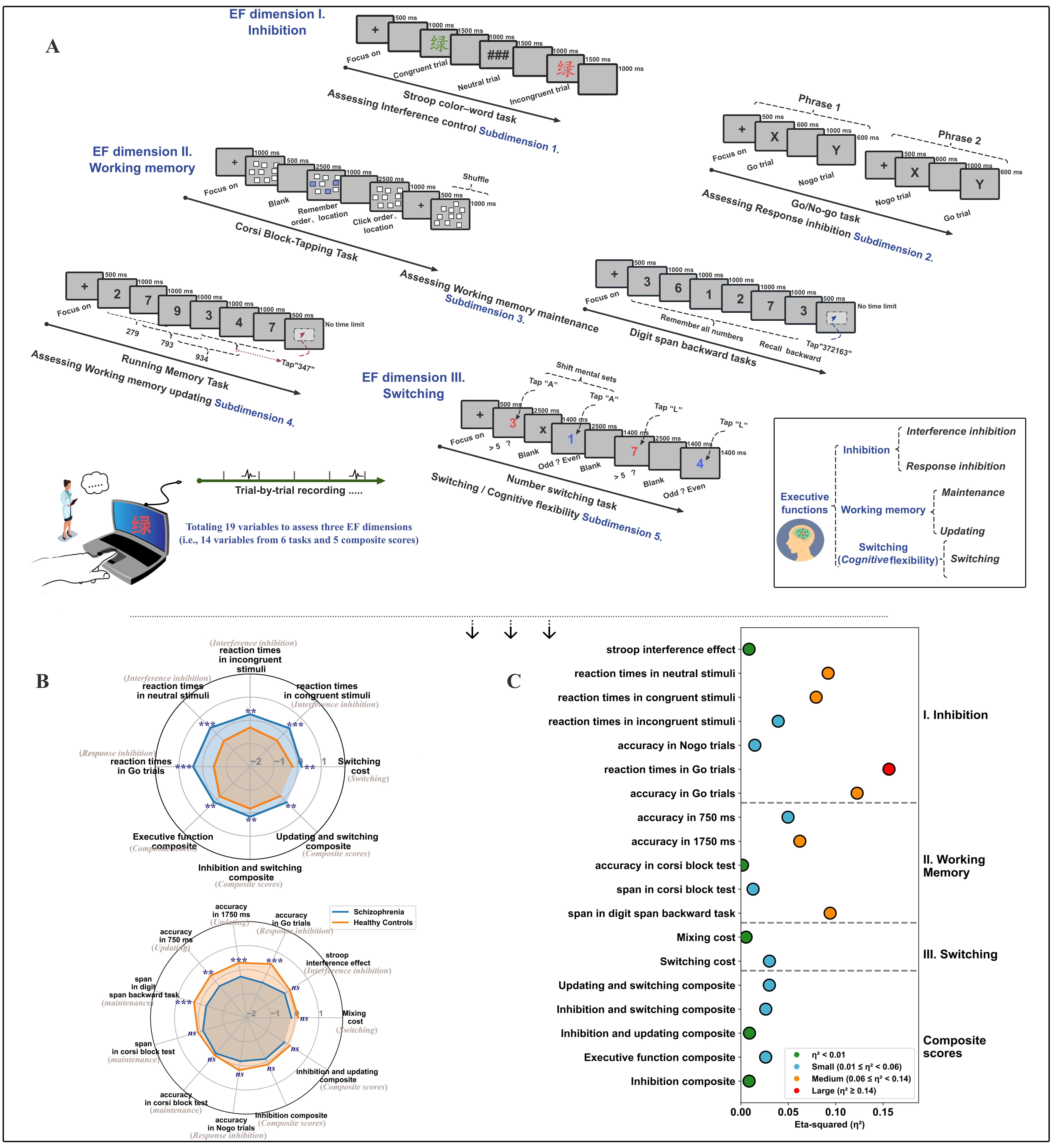
Figure 3
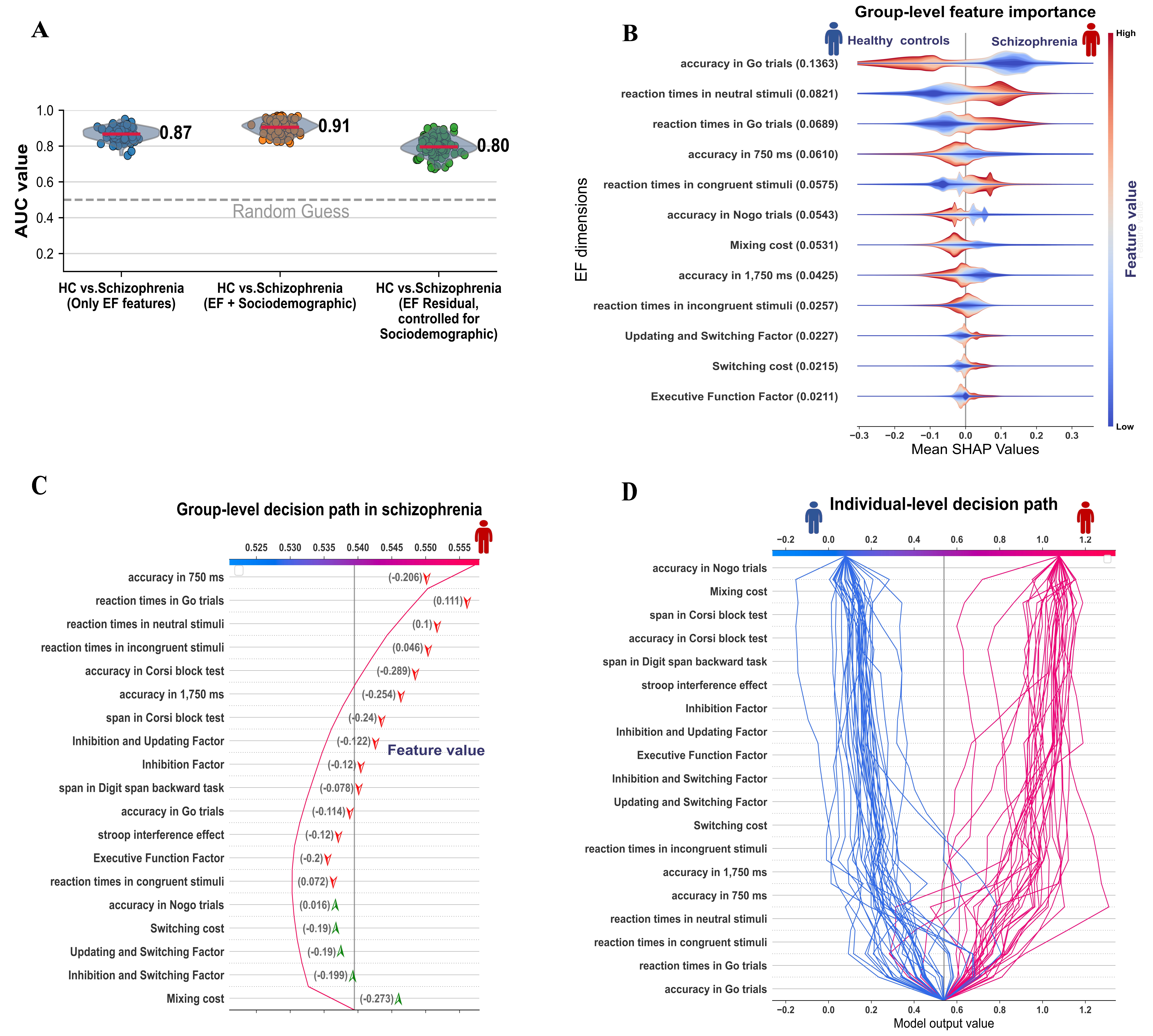
Figure 4
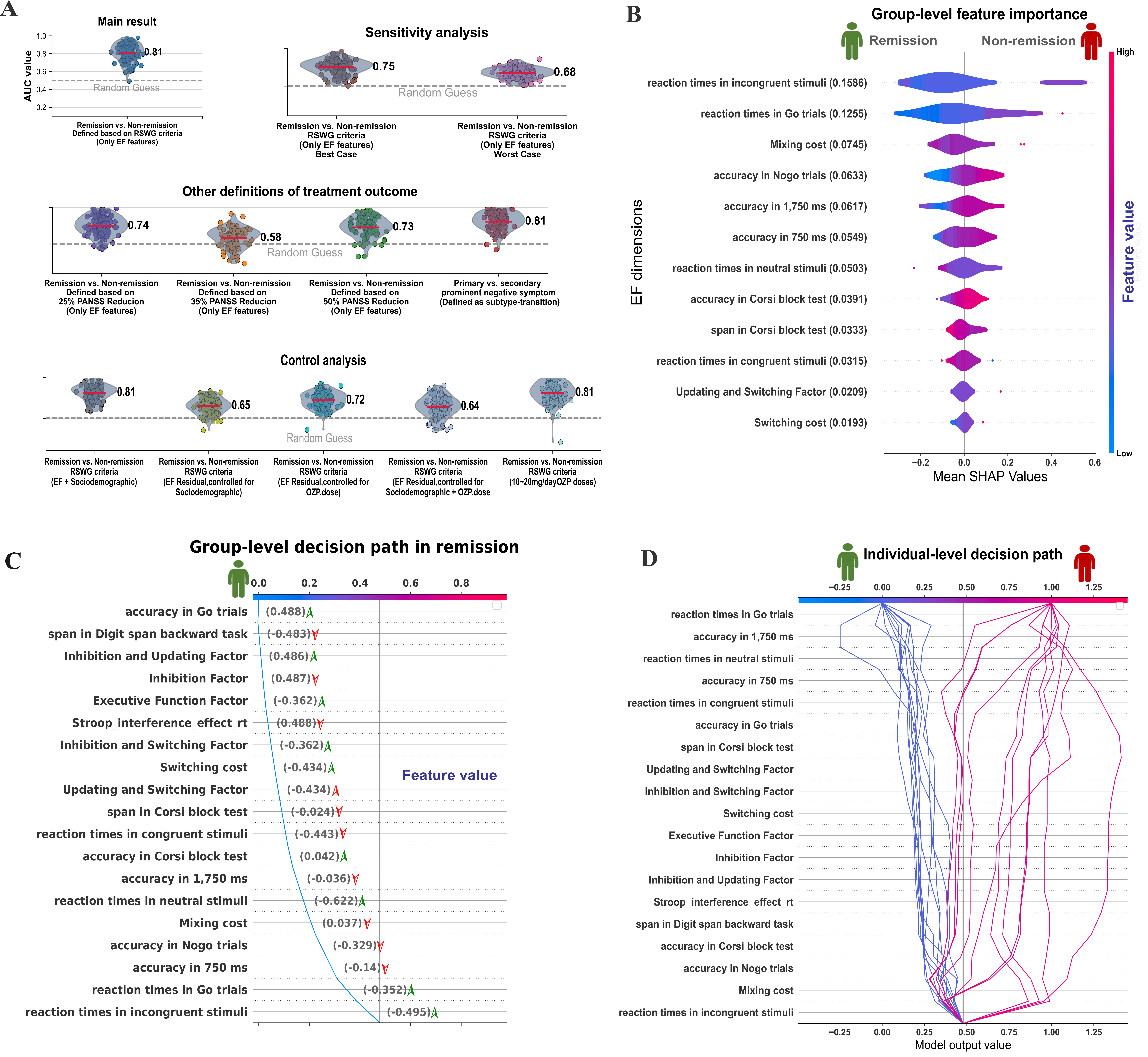
Figure 5
2025年-9月
PublishedZhang, T., Su, M., Huo, X., & Zhao, X. (2025). Rethinking the effects of working memory training on executive functions in schizophrenia: A machine learning approach. International Journal of Clinical and Health Psychology, 25(4), 100628. https://doi.org/10.1016/j.ijchp.2025.100628
查看摘要
Background: Executive dysfunction in schizophrenia profoundly impairs functional outcomes and remains insufficiently addressed by standard pharmacological treatments. While computerized cognitive training offers promise, traditional evaluation methods often fail to capture nuanced improvements along the psychosis-health continuum. This study aims to quantify executive function (EF) profile changes following working memory training and identify robust baseline predictors of treatment response.
Methods: Ninety-four schizophrenia patients were randomized to adaptive N-back training (n = 32), non-adaptive 1-back control (n = 33), or treatment-as-usual (n = 29). EF was assessed across working memory, cognitive flexibility, and inhibitory control domains. A support vector machine classifier, trained on an independent sample (195 patients, 169 controls) and calibrated via Platt scaling, quantified EF profile changes. An exploratory framework based on Granger causality principles identified baseline treatment predictors.
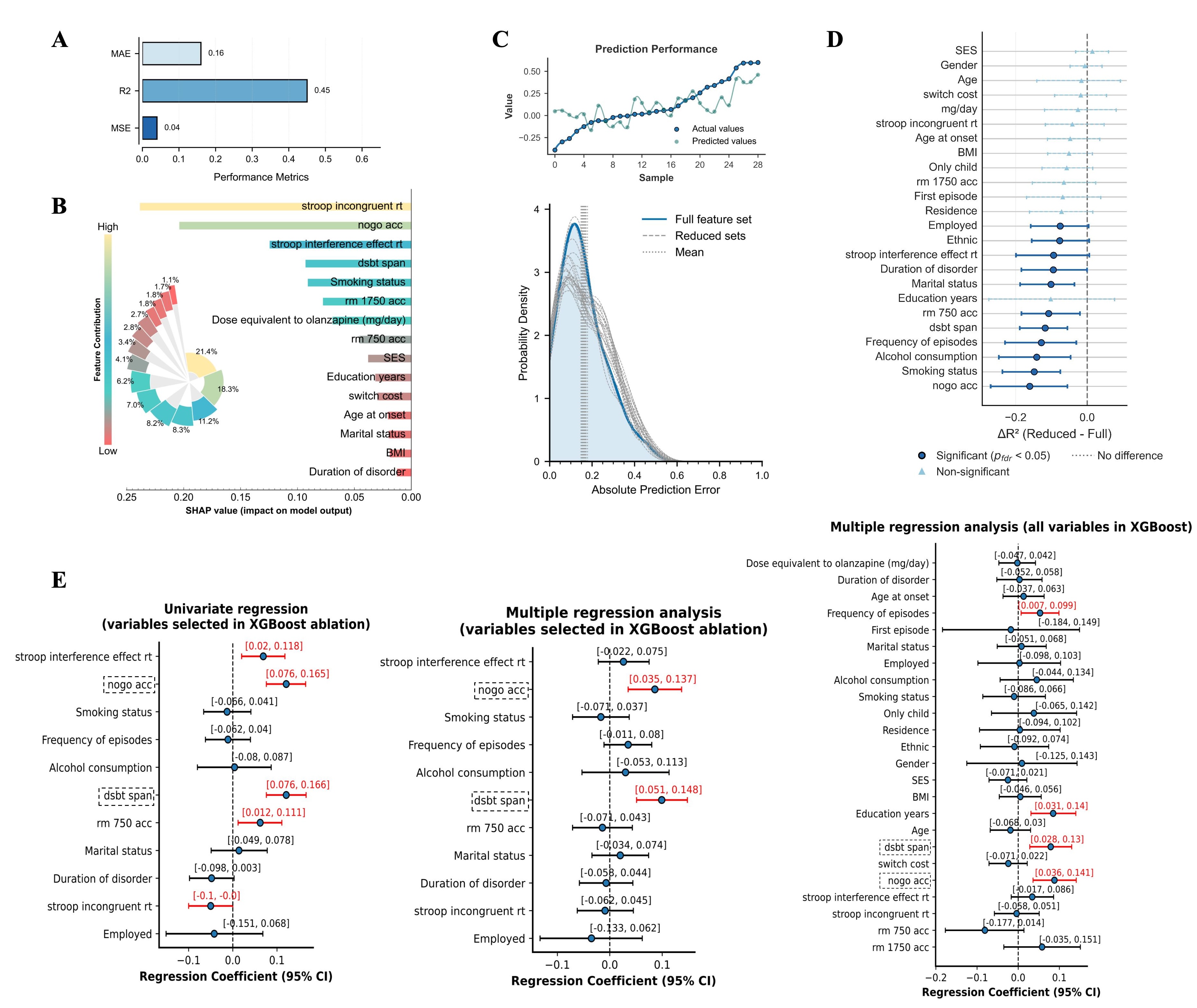
Results: Adaptive training produced significant near-transfer effects on untrained working memory tasks and reduced general psychopathology (pfdr < 0.05), but no far-transfer effects to other EF domains. The probability of neurotypical EF classification increased substantially in the adaptive group (13.21% to 38.79%, p < 0.001), correlating with symptom reduction. Working memory maintenance and response inhibition emerged as the most robust baseline predictors of treatment response.
Conclusions: Working memory training induces meaningful shifts in EF profiles in schizophrenia, promoting movement along the psychosis-health continuum toward neurotypical functioning. The classifier-based approach provides a more refined assessment compared to traditional binary measures, while the exploratory framework identifies specific EF domains predicting treatment response with potential causal relevance. These findings warrant validation through larger, multi-center trials with extended follow-up periods.
Methods: Ninety-four schizophrenia patients were randomized to adaptive N-back training (n = 32), non-adaptive 1-back control (n = 33), or treatment-as-usual (n = 29). EF was assessed across working memory, cognitive flexibility, and inhibitory control domains. A support vector machine classifier, trained on an independent sample (195 patients, 169 controls) and calibrated via Platt scaling, quantified EF profile changes. An exploratory framework based on Granger causality principles identified baseline treatment predictors.
Results: Adaptive training produced significant near-transfer effects on untrained working memory tasks and reduced general psychopathology (pfdr < 0.05), but no far-transfer effects to other EF domains. The probability of neurotypical EF classification increased substantially in the adaptive group (13.21% to 38.79%, p < 0.001), correlating with symptom reduction. Working memory maintenance and response inhibition emerged as the most robust baseline predictors of treatment response.
Conclusions: Working memory training induces meaningful shifts in EF profiles in schizophrenia, promoting movement along the psychosis-health continuum toward neurotypical functioning. The classifier-based approach provides a more refined assessment compared to traditional binary measures, while the exploratory framework identifies specific EF domains predicting treatment response with potential causal relevance. These findings warrant validation through larger, multi-center trials with extended follow-up periods.
Figure 1
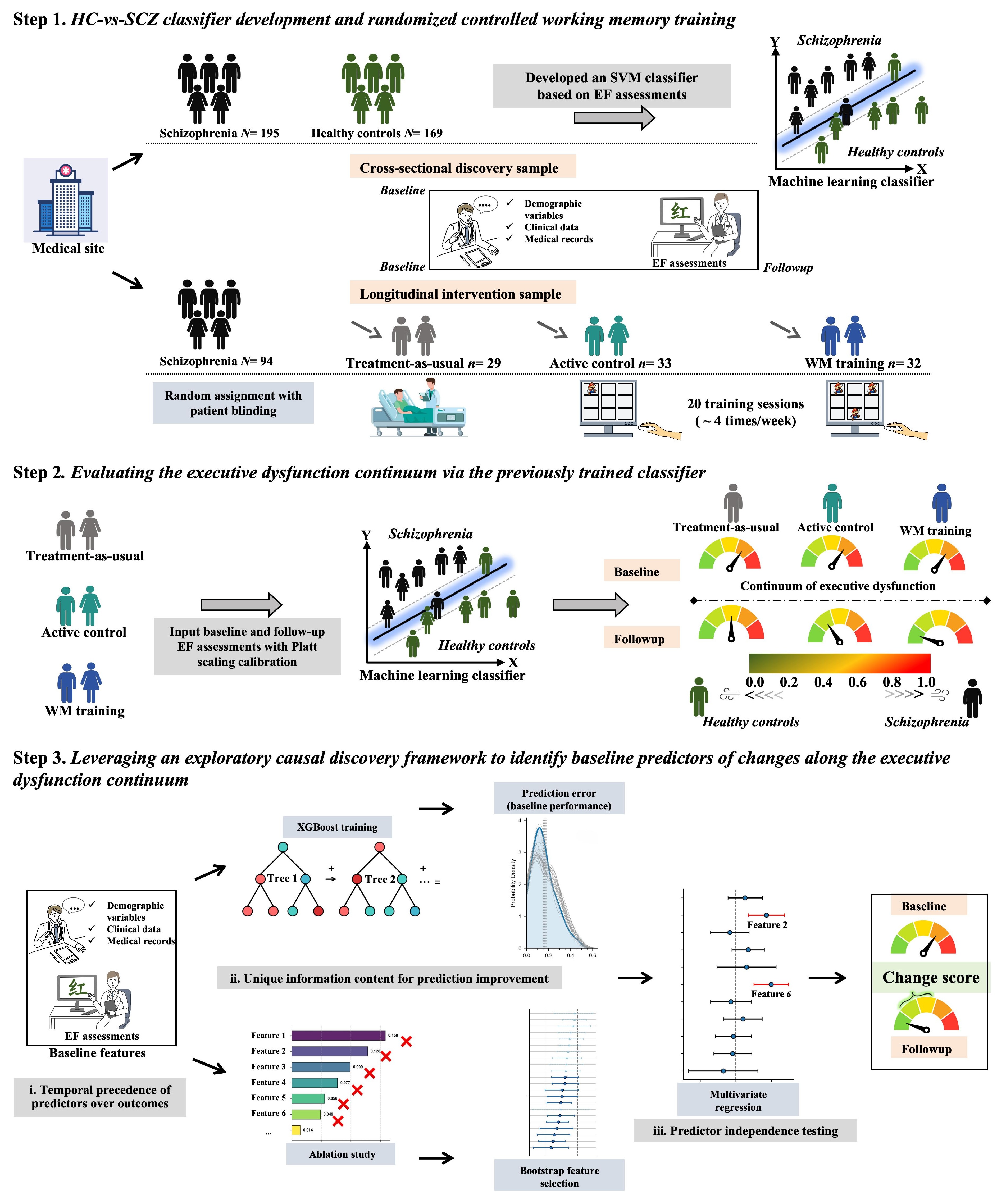
Figure 2
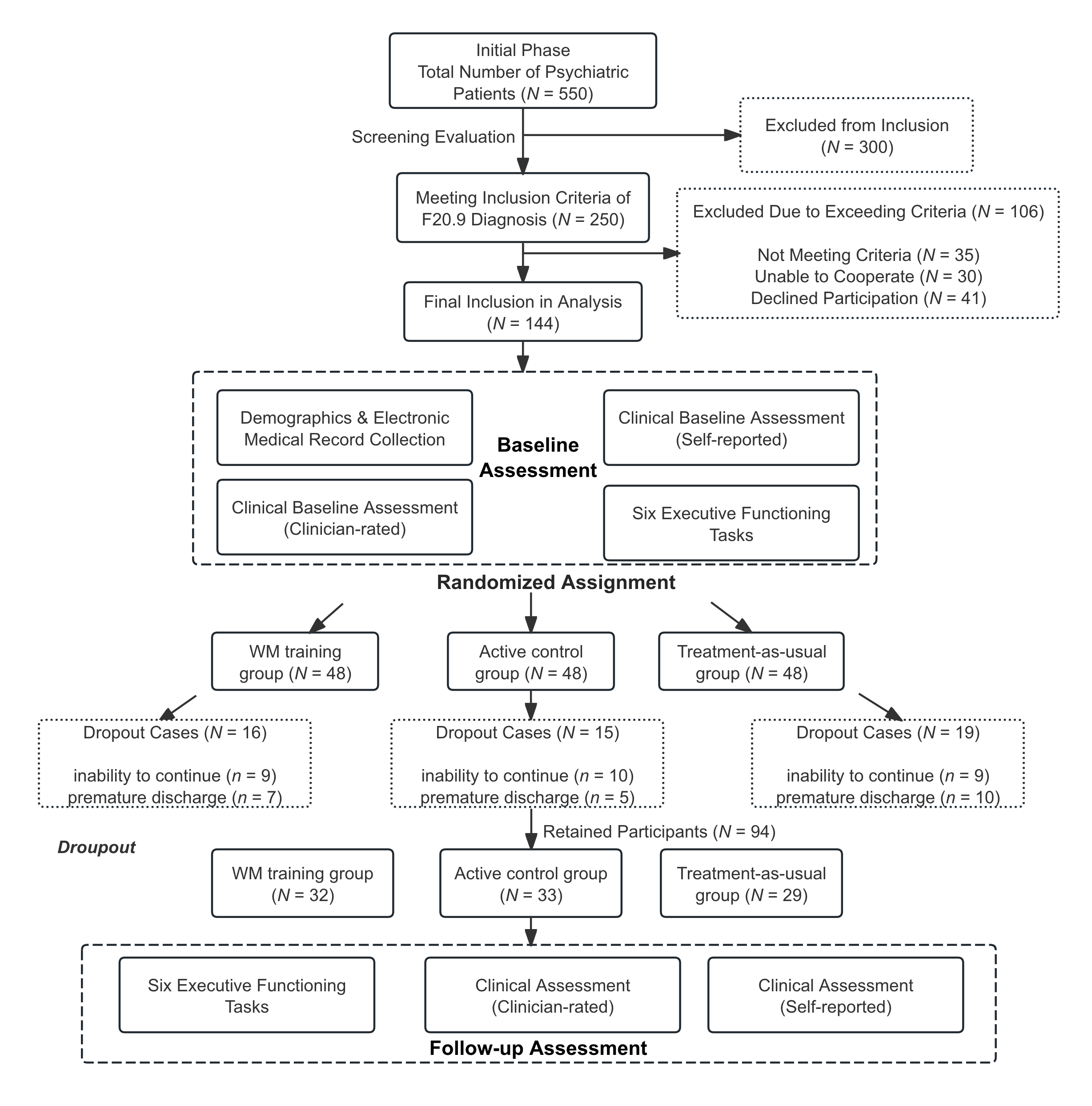
Figure 3
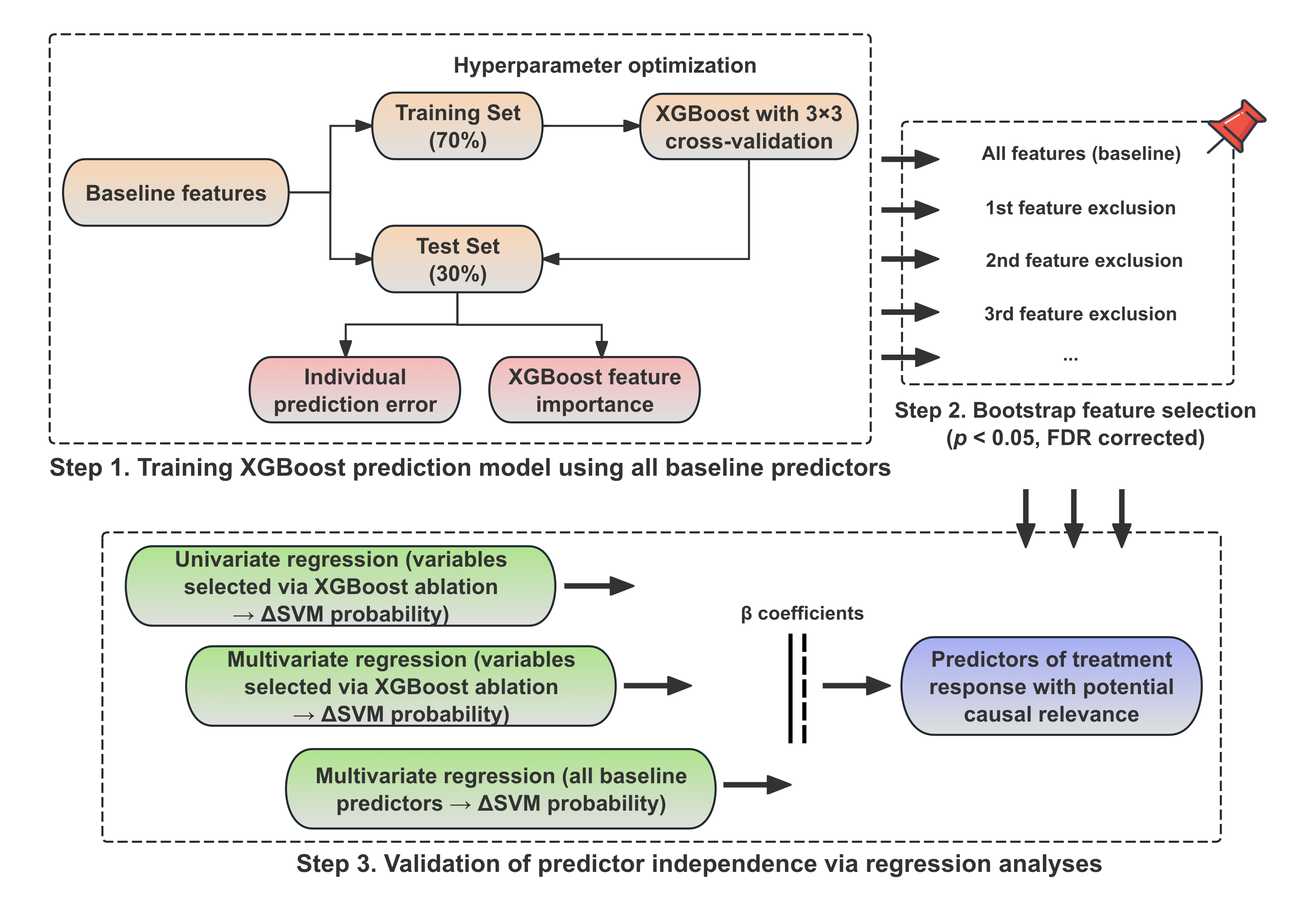
Figure 4
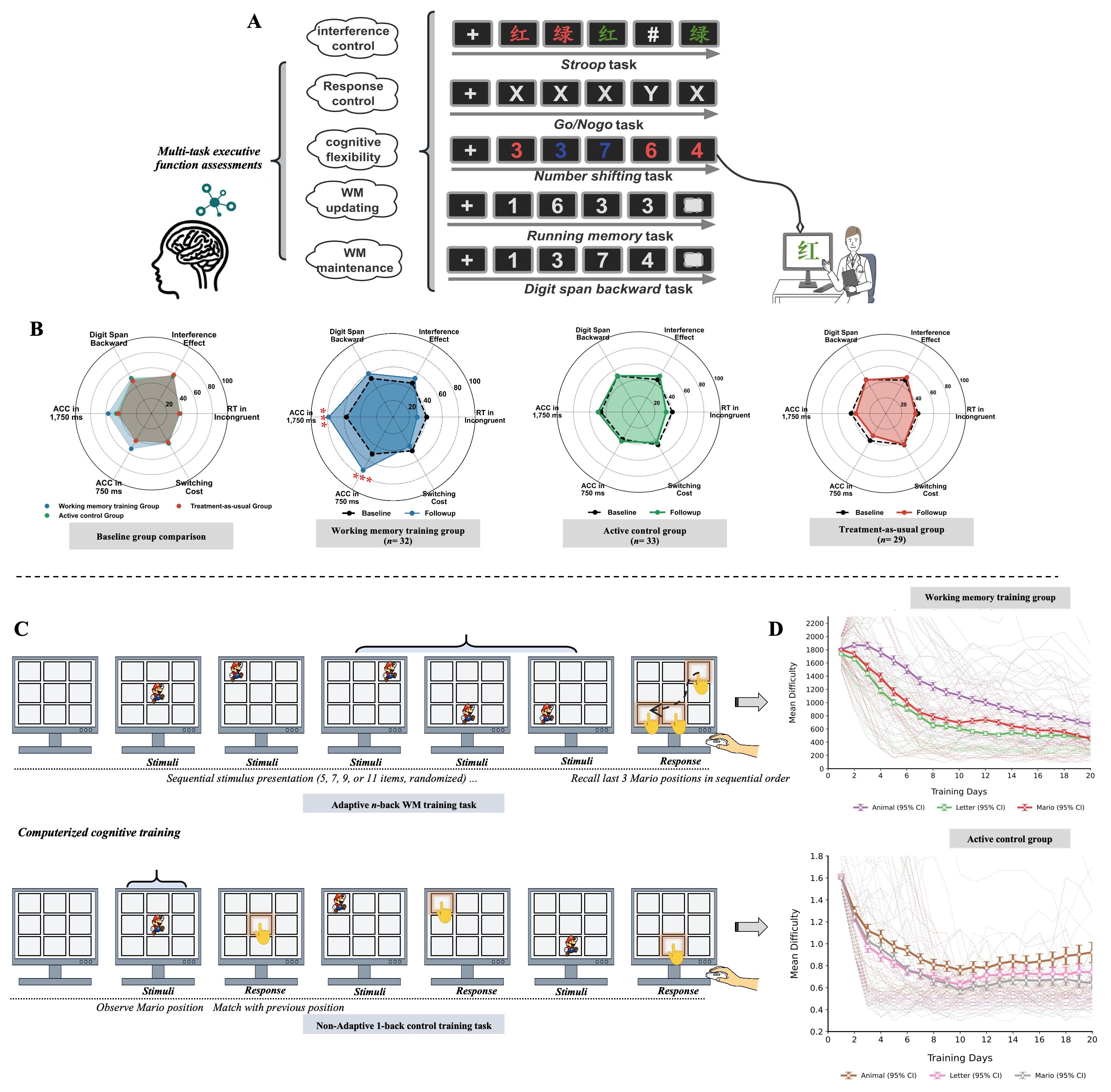
Figure 5
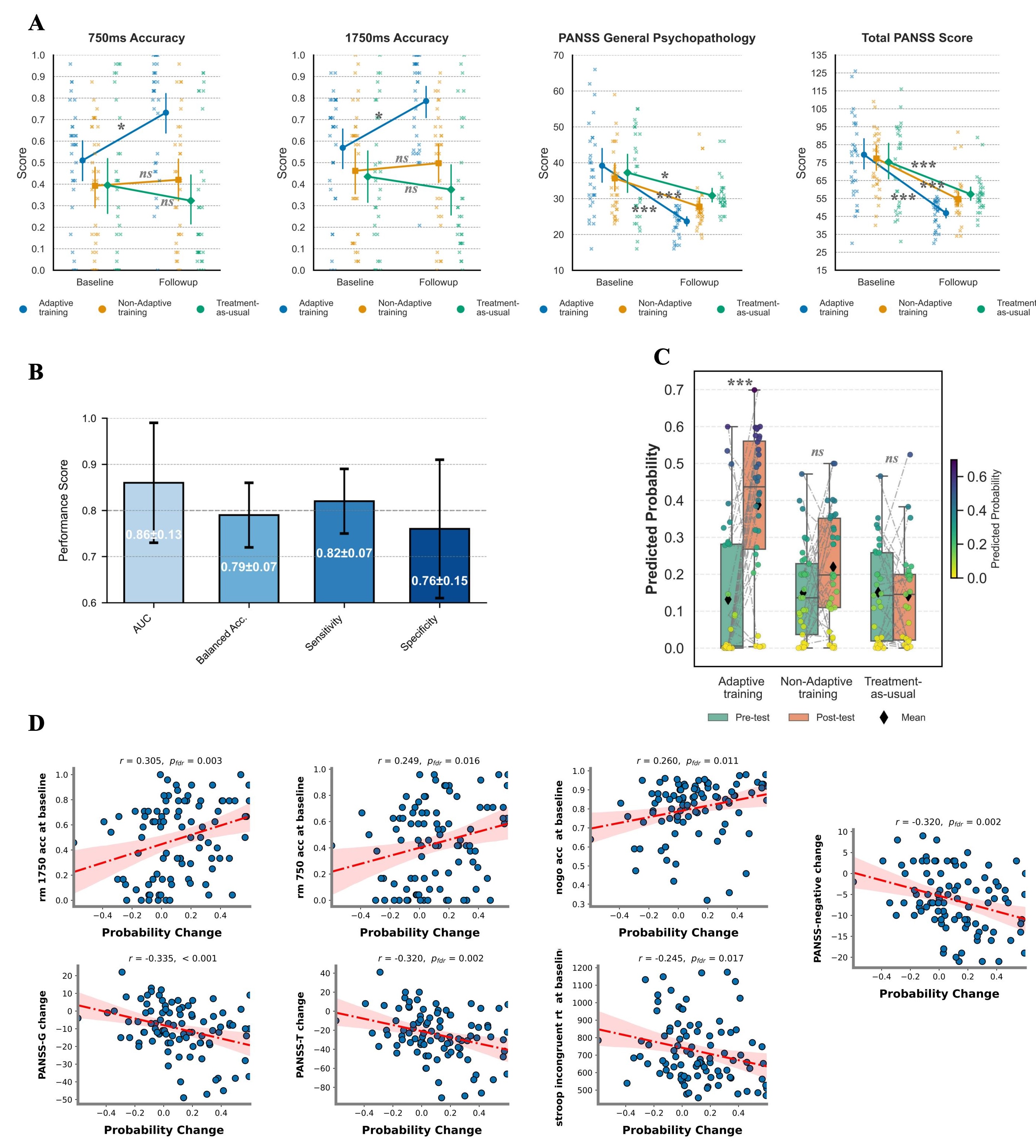
Figure 6
2025年-6月
PublishedZhang, T., Yang, X., Mu, P., Huo, X., & Zhao, X. (2025). Stage-specific computational mechanisms of working memory deficits in first-episode and chronic schizophrenia. Schizophrenia Research, 282, 203-213. https://doi.org/10.1016/j.schres.2025.06.012
查看摘要
Background: Cognitive dysfunction, particularly working memory (WM) impairment, constitutes a core feature of schizophrenia and is largely unresponsive to available antipsychotic treatments. The computational mechanisms underlying WM deficits at different illness stages and their associations with clinical symptom dimensions remain poorly understood.
Methods: We applied hierarchical drift diffusion modeling (HDDM) to dissect latent cognitive processes underlying WM performance in a two-back task among patients with first-episode schizophrenia (FES, N = 103, illness duration ≤2 years), chronic schizophrenia (ChSz, N = 108, illness duration ≥5 years), and healthy controls (HCs, N = 85). Multiple regression and mediation analyses were conducted to examine associations between HDDM parameters, clinical symptoms, and conventional metrics.
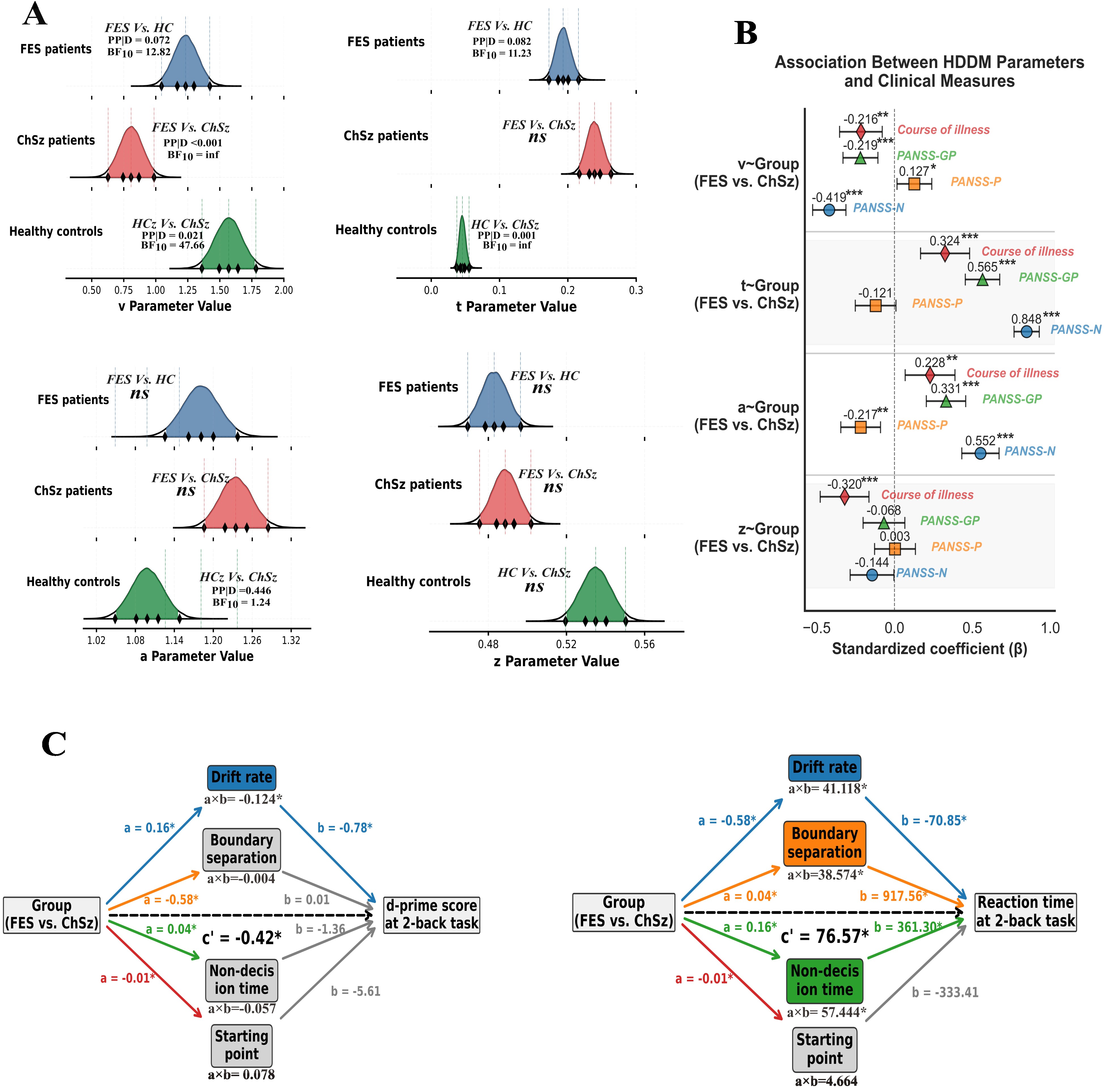
Results: Both patient groups exhibited significant WM deficits compared to HCs, with ChSz patients demonstrating more pronounced impairments than FES patients. HDDM analysis revealed that patients showed significantly reduced drift rate and prolonged non-decision time compared to HCs. Notably, while non-decision time remained comparable between FES and ChSz groups, drift rate was significantly lower in ChSz patients, mediated the relationship between illness stage and WM performance, and negatively correlated with negative symptoms and general psychopathology.
Conclusions: This study reveals distinct computational profiles of WM deficits across different stages of schizophrenia. While non-decision time impairments emerge early and persist, reduced drift rate progressively deteriorates with illness duration and is closely linked to specific clinical symptoms. These findings enhance our understanding of WM dysfunction across illness stages and support the development of targeted cognitive interventions tailored to illness stage and symptom severity.
Methods: We applied hierarchical drift diffusion modeling (HDDM) to dissect latent cognitive processes underlying WM performance in a two-back task among patients with first-episode schizophrenia (FES, N = 103, illness duration ≤2 years), chronic schizophrenia (ChSz, N = 108, illness duration ≥5 years), and healthy controls (HCs, N = 85). Multiple regression and mediation analyses were conducted to examine associations between HDDM parameters, clinical symptoms, and conventional metrics.
Results: Both patient groups exhibited significant WM deficits compared to HCs, with ChSz patients demonstrating more pronounced impairments than FES patients. HDDM analysis revealed that patients showed significantly reduced drift rate and prolonged non-decision time compared to HCs. Notably, while non-decision time remained comparable between FES and ChSz groups, drift rate was significantly lower in ChSz patients, mediated the relationship between illness stage and WM performance, and negatively correlated with negative symptoms and general psychopathology.
Conclusions: This study reveals distinct computational profiles of WM deficits across different stages of schizophrenia. While non-decision time impairments emerge early and persist, reduced drift rate progressively deteriorates with illness duration and is closely linked to specific clinical symptoms. These findings enhance our understanding of WM dysfunction across illness stages and support the development of targeted cognitive interventions tailored to illness stage and symptom severity.
Figure 1
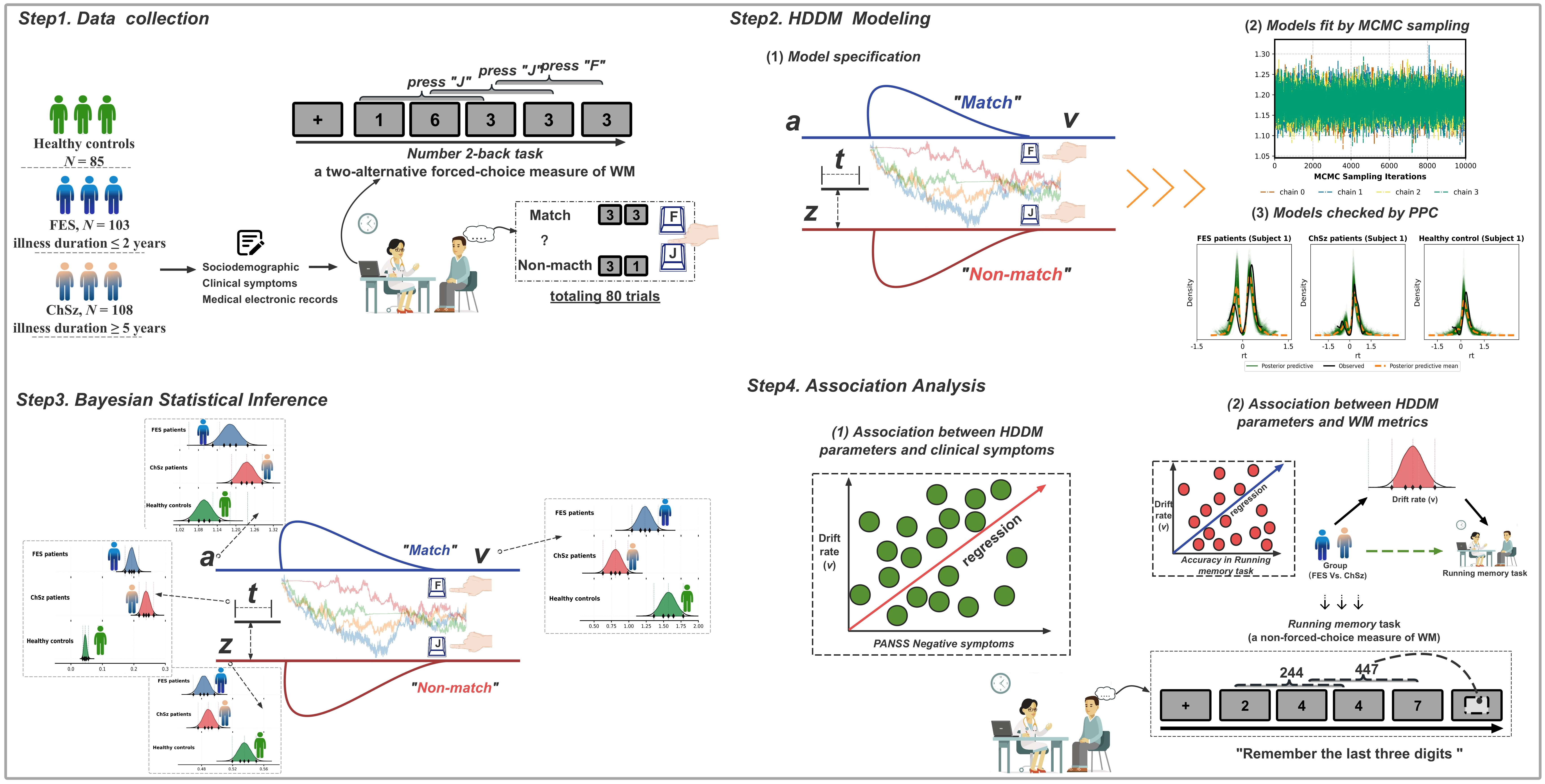
Figure 2
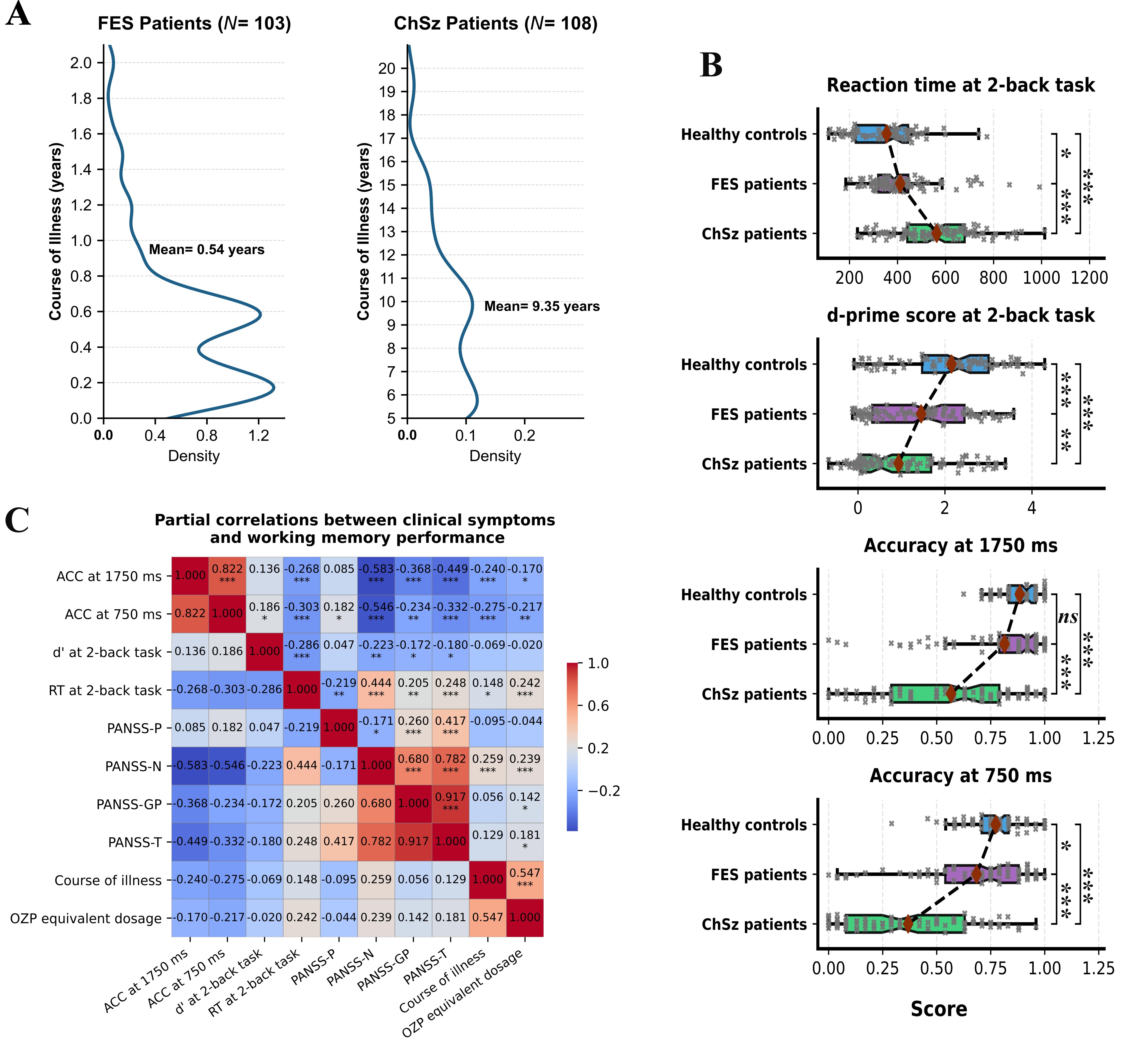
Figure 3
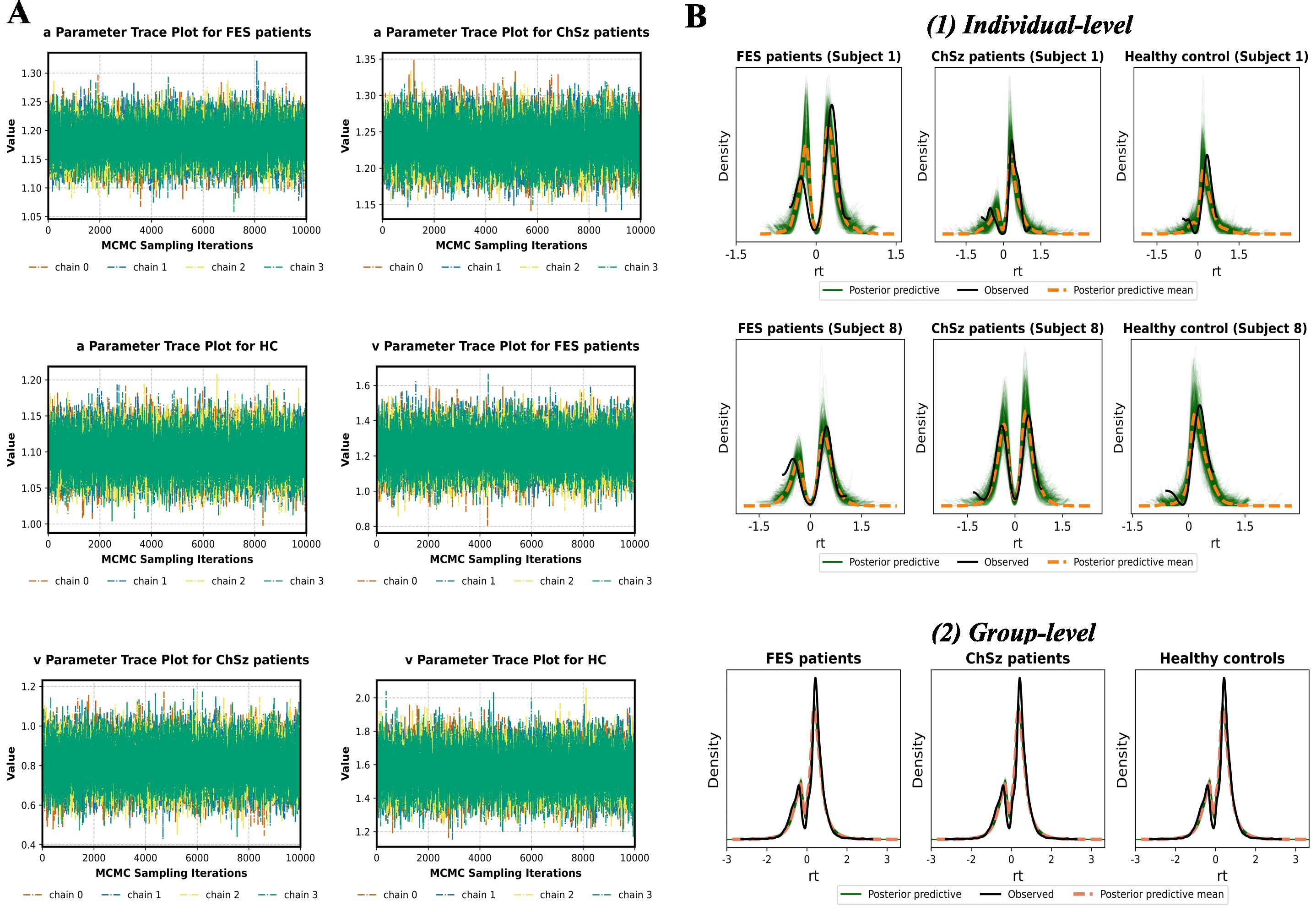
Figure 4
× ![]()
合作发表(Collaborative Publications)
2026年
Under ReviewIdentifying Generative AI Use Profiles Among College Students Using Latent Profile Analysis: Associations with Depression and Anxiety
Submitted to Journal of Affective Disorders
2026年
PublishedYang, X., Zhang, T., Ren, X., Wang, Y., Lv, H., Su, M., Huo, X., & Zhao, X. (2026). Differential profiles of executive function dimensions in first-episode and chronic schizophrenia: Identifying markers of illness stage. The European Journal of Psychiatry, 40(2), 100351. https://doi.org/10.1016/j.ejpsy.2026.100351
2. 会议报告(Conference Presentations)
2026年中欧人类认知与人工智能国际会议(Joint ESCoP-CoPM Meeting 2026)
- 报告形式:口头报告(已录用)
- 时间:2026年9月
- 地点:浙江大学,杭州,中国
2026年清华大学心理与认知科学系博士生论坛
- 报告形式:海报展贴 下载海报 (PDF)
- 时间:2026年4月
- 地点:清华大学,北京,中国
兰州市第三人民医院学术讲座
2025年心理与认知科学联合论坛暨北京大学心理与认知科学学院博士生论坛
- 报告形式:海报展贴 下载海报(PDF)
- 时间:2025年4月19日
- 地点:北京大学
兰州市第三人民医院学术讲座
第二十五届全国心理学学术会议
- 报告形式:分论坛口头报告 下载报告(PDF)
- 时间:2023年10月
- 地点:四川师范大学,成都,中国
3. 科研项目(Research Projects)
主持项目
- 2024年省级博士创新之星科研项目(No. 2025CXZX-366)(2025-12 结项)
参与项目
- 国家自然科学基金地区项目(32260207)”认知训练对乡村儿童执行功能的提升”(参与,2022—2025)
- 国家重点研发计划(2021ZD0203800)科技创新2030”脑科学与类脑研究”重大项目:注意的神经环路机制研究(课题4:特殊人群注意研究及应用)(参与,2021.12—2026.12)
4. 寻求科研合作(Seeking Research Collaboration)
联系方式
欢迎学术合作与交流!如有合作意向或学术问题讨论,请联系:tyzhang9804@gmail.com
注: 本人目前为在读博士研究生,合作前需征得导师同意
5. 研究资源(Research Resources)
开放代码(Open Code)
- Stacking Model with SHAP Explanation (下载代码)
- Citation: Zhang, T., Zhao, X., Yeo, B. T. T., Huo, X., Eickhoff, S. B., & Chen, J. (2024). Leveraging stacked classifiers for multi-task executive function in schizophrenia yields diagnostic and prognostic insights. medRxiv. https://doi.org/10.1101/2024.12.05.24318587
Last updated on July 29, 2025, at 16:07:06 (GMT+8) by Tongyi Zhang, Lanzhou, China.